Blog
Blog
A Taste of Taiwan: The Best Foods to Try in 2025

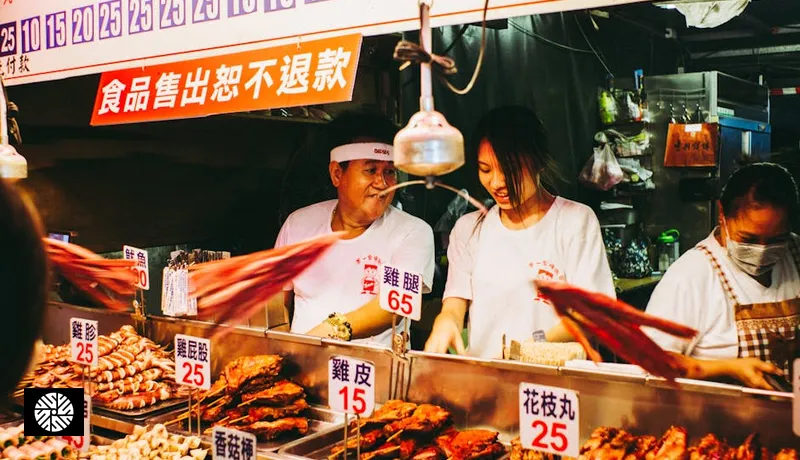
Ask any returning visitor what they miss most about Taiwan and the answer is almost never a temple, a hot spring, or a hike. It is the food. The night markets, the breakfast shops, the bowl of beef noodle soup at 11 PM after a long flight. Taiwanese cuisine has spent the last decade graduating from "delicious local secret" to one of Asia's most respected food destinations — earning Michelin stars, Asia's 50 Best placements, and a steady stream of culinary tourists who book flights specifically to eat.
Many of our patients tell us the same thing on the way home: "I came for the screening. I'll come back for the food." Pairing a health screening with a serious eating itinerary is one of the most underrated reasons to visit Taiwan. You arrive Monday, screen Tuesday morning on an empty stomach, and by Tuesday lunch you are at Yong Kang Beef Noodle three blocks from the clinic. This guide is the eating itinerary — what to try, where, and how the regions differ.
What makes Taiwanese food different from Chinese food
People often lump Taiwanese food in with "Chinese food," and it is one of the lazier mistakes a traveler can make. Taiwan's cuisine is its own thing, shaped by a specific colonial and migration history that no other place shares.
The base layer is Hokkien (Fujianese), brought by the early Han settlers who arrived from the southeastern coast of China starting in the 1600s. That gives Taiwan its love of seafood, light braises, sweet potato congee, and an obsession with oysters and milkfish. On top of that, the Japanese colonial period (1895-1945) layered in tempura, sashimi, mochi, and a precision-and-presentation sensibility you still see in modern Taipei kitchens. The Japanese also built the railroad bento (鐵路便當) tradition that survives today.
Then in 1949, Chiang Kai-shek's defeated Nationalist government retreated to Taiwan with roughly two million mainland Chinese — soldiers, civil servants, and their families from every province. Suddenly Taipei had Sichuanese chili-bean paste, Shandong dumplings, Shanghainese soup buns, Hunanese smoked meats, and Beijing scallion pancakes within a few city blocks. Beef noodle soup as we know it today is a 1950s invention by Sichuanese veterans who spiced up Hokkien noodles with broad-bean paste — a fusion dish less than a century old.
Add a fourth layer: the indigenous Austronesian peoples of the mountains and east coast, who contributed millet wine, smoked wild boar, taro preparations, and bamboo-tube rice. Stack all of that on a tropical island with year-round produce and you get something genuinely unique — not a regional Chinese cuisine, but its own thing.
Beef noodle soup — three styles ranked
If you eat one dish in Taiwan, make it beef noodle soup (牛肉麵). The Taipei International Beef Noodle Festival has run since 2005 and the city takes the dish as seriously as Tokyo takes ramen. Three main styles dominate, and you should try at least two before you fly home.
Hong shao (紅燒) — red-braised, spicy. This is the famous one. The broth is dark, oily, and aggressive — built on doubanjiang (broad-bean chili paste), star anise, ginger, and rock sugar, simmered with beef shank and tendon for hours. Eat it at Lin Dong Fang (林東芳牛肉麵) on Bade Road, which is open until 3 AM and is the closest thing Taipei has to a beef-noodle institution. The pickled mustard greens on the table are not optional.
Qing dun (清燉) — clear-broth. The grown-up version. No spice, no bean paste — just bone broth, scallions, and beef simmered until the water itself tastes like meat. Liu Shan Dong Beef Noodles (劉山東牛肉麵) downtown has been doing it since 1951 and is the canonical bowl. Order it the morning after a long night out. The clear broth is also the easier option if you have a sensitive stomach post-screening.
Sha cha (沙茶) — south Taiwan's umami bomb. Sha cha sauce is a Chaoshan-origin paste of dried shrimp, brill fish, garlic, and chili. Stirred into broth, it makes a savory, slightly funky, deeply addictive bowl that you will not find outside of Taiwan and Singapore. Try it in Tainan or at sha cha specialists in Kaohsiung.
For a deeper dive on Taipei neighborhoods around these noodle shops, our first-time Taipei travel guide covers the metro stops you need.
Xiao long bao — Din Tai Fung and beyond
Xiao long bao (小籠包) — the soup-filled dumpling — was popularized globally by Din Tai Fung, which started as a humble cooking-oil shop on Yongkang Street in Taipei in 1958 before pivoting to dumplings in 1972. The original Yongkang location is still there, still has a queue, and the dumplings still measure within a one-gram tolerance per piece. It is genuinely worth the wait once.
But Taipei locals will tell you, often loudly, that Din Tai Fung is not the best xiao long bao in town. It is the most consistent, the most polished, and the most foreigner-friendly — but the city has half a dozen shops doing equal or better work for half the price.
- Hangzhou Xiao Long Bao (杭州小籠湯包) — near Chiang Kai-shek Memorial Hall. Locals' pick, thinner skin, more soup.
- Mingyue Tangbao (明月湯包) — out in Xinyi. The crab-roe version is the best in Taipei.
- Gao Ji (高記) — also on Yongkang Street, older than Din Tai Fung. The pan-fried version (生煎包) is the move here.
- Dian Shui Lou (點水樓) — slightly more upscale, multiple locations, excellent crab and pork combination.
The technique is the same everywhere: 18 pleats, thin skin, soup inside. The differences are in the pork-to-soup ratio, the broth gelatin, and the dipping sauce — black vinegar with shredded ginger, in a 3:1 ratio if you want to do it properly.
Night market essentials — what to eat at Shilin / Raohe / Ningxia
Night markets are not a tourist gimmick in Taiwan. They are how locals eat dinner several nights a week. Different markets specialize in different dishes — going to the right one for the right food matters.
| Night Market | Best Known For | Vibe | Crowd |
|---|---|---|---|
| Shilin (士林) | Fried chicken cutlet (Hot Star), oyster omelette, big sausage in small sausage | Largest, touristy, easiest entry point | First-timers |
| Raohe (饒河) | Black pepper pork buns (胡椒餅), medicinal pork ribs soup, stinky tofu | Linear single street, foodie favorite | Locals + serious eaters |
| Ningxia (寧夏) | Taro balls, sesame oil chicken, traditional pork liver soup | Smaller, traditional, no-frills | Old-school Taipei |
| Tonghua / Linjiang (通化/臨江) | Mango shaved ice, scallion pancakes, papaya milk | Lifestyle, residential, less hectic | Younger Taipei |
Top ten dishes to chase across these markets, in rough order of "you must try this":
- Pork pepper buns (胡椒餅) — Raohe's entrance stall, Fuzhou Black Pepper Buns. Oven-baked in a tandoor-style clay oven. Eat immediately, burn your mouth, no regrets.
- Oyster omelette (蚵仔煎) — Shilin's underground food court does the famous version. Sweet potato starch, fresh oysters, egg, pickled greens, sweet-savory sauce.
- Stinky tofu (臭豆腐) — Raohe's deep-fried version, served with kimchi-style pickled cabbage. Smell is worse than the taste. Always.
- Fried chicken (鹹酥雞 / 鹽酥雞) — point at what you want, watch them fry it twice. The fresh basil thrown in at the end is the secret. Hot Star Large Fried Chicken (Shilin original) is the cutlet version.
- Scallion pancake (蔥油餅) — flaky, layered, with an egg cracked on top. Tonghua does the classic.
- Wheel cake (車輪餅 / imagawayaki) — Japanese-origin, stuffed with red bean, custard, or savory cabbage. Cheap and excellent.
- Mango shaved ice (芒果冰) — Tonghua and Yongkang Street's Smoothie House are the famous stops. Only in mango season (May-September).
- Bubble tea (珍珠奶茶) — every market has it; Chun Shui Tang in Taichung claims the original 1980s invention.
- Medicinal pork ribs soup (藥燉排骨) — Raohe's specialty. Twenty Chinese herbs, hours of simmering. Tastes like a hug.
- Grilled meat skewers (烤肉串) — Ningxia's more traditional vendors, brushed with sweet soy and sa-cha sauce.
Breakfast culture — Taipei's morning ritual
Hotel breakfast in Taipei is fine. Skipping it for a real Taiwanese breakfast at the corner soy milk shop is the move. Breakfast culture here is one of the city's quiet pleasures, mostly invisible to first-time tourists who sleep in.
The standard order at a 豆漿店 (soy milk shop):
- Hot or cold soy milk (豆漿), sweetened or unsweetened. Salty soy milk (鹹豆漿) is the regional cult favorite — soy milk that curdles into a savory soup with dried shrimp, pickled radish, scallions, and a splash of vinegar. Sounds wrong, tastes incredible.
- Shao bing (燒餅) — sesame-topped flatbread, oven-toasted. Order it stuffed with a Chinese-style egg crepe (夾蛋) or with a fried dough cruller (油條) inside (燒餅油條).
- Egg crepe (蛋餅) — Taiwan's answer to the breakfast burrito. Thin pancake wrapped around scrambled egg, often with cheese, ham, corn, or basil. Order it hand-rolled (手工蛋餅) for the better, chewier dough.
- Fan tuan (飯糰) — sticky rice ball stuffed with pickled radish, pork floss, fried cruller, and egg. Eaten with soy milk on the side. Filling enough to skip lunch.
The two famous chains are Yong He Soy Milk King (永和豆漿大王), named after the Yonghe district that became famous for soy milk shops in the 1950s, and Fu Hang Soy Milk (阜杭豆漿), which has a 90-minute morning queue inside the Huashan Market food court — yes, it's worth it once.
Regional cuisines — Tainan, Taichung, Kaohsiung, Hualien
Taiwan is small — you can drive end to end in five hours — but its regional cuisines are surprisingly distinct. If you have time after Taipei, the south is where the food culture runs deepest.
| Region | Flavor Profile | Must-Try Dishes | Worth a Trip For |
|---|---|---|---|
| Tainan | Sweetest cuisine in Taiwan — sugar in nearly everything | Danzai noodles (擔仔麵), milkfish congee (虱目魚粥), coffin bread (棺材板), shrimp rolls (蝦捲) | Old-Taiwan history + densest food per square block |
| Taichung | Innovative, dessert-forward, the bubble tea birthplace | Sun cake (太陽餅), bubble tea at Chun Shui Tang, Fengjia night market chicken cutlet | Day trip from Taipei (1 hour HSR) |
| Kaohsiung | Port city seafood + Hakka country food in the hills | Sashimi at Cijin Island, Hakka stir-fry, papaya milk, sea-snail noodles | Seafood lovers + warmer weather |
| Hualien | Indigenous Austronesian + mountain ingredients | Wild boar sausage, bamboo-tube rice, millet wine, mochi (Hualien specialty) | Pair with Taroko Gorge — see our natural spots guide |
| Penghu | Island cuisine — peanuts, sweet potato, fresh seafood | Cactus ice, peanut nougat, sweet potato cake, brown sugar cake | Summer beach trip add-on |
Tainan is the one we send most food-serious patients to after their screening. The HSR puts it 90 minutes south of Taipei, the historical center is walkable, and the density of family-run shops that have been making one dish for four generations is unmatched anywhere else in Taiwan.
Vegetarian / Buddhist food in Taiwan
Taiwan is one of the easiest places in the world to be vegetarian. Roughly 13-14% of the population eats vegetarian regularly — much of it driven by Buddhist religious practice — and the infrastructure reflects that. Every neighborhood has at least one dedicated 素食 (su shi, vegetarian) restaurant, often a buffet (素食自助餐) where you point at dishes and pay by weight.
What makes Taiwan's vegetarian scene different from, say, India's, is the mock meat tradition. Skilled Buddhist chefs build dishes that look, taste, and texture like meat using gluten, soy protein, mushrooms, and root vegetables. The mock duck, mock fish, and mock pork at a good 素食 restaurant are uncanny. Even committed carnivores find themselves enjoying the buffets.
Look for these symbols on signage and menus:
- 素 (su) — vegetarian (varies — may include onion/garlic/dairy)
- 全素 (quan su) — strict Buddhist: no meat, eggs, dairy, onion, garlic, leek, scallion
- 蛋奶素 (dan nai su) — ovo-lacto vegetarian
- 植物五辛素 — vegetarian including the five aromatics (most flexible)
Recommended starting points: Minder Vegetarian (明德素食園) for upscale buffet, Yang Shin (養心茶樓) for vegetarian dim sum (genuinely excellent), and any neighborhood 素食自助餐 for the everyday version at NT$80-120 a tray.
Tea, bubble tea, and Taiwan's drink culture
Bubble tea (珍珠奶茶, "pearl milk tea") was invented in Taichung in the 1980s — both Chun Shui Tang and Hanlin Tea Room claim the origin, and the lawsuit was inconclusive. What started as cold black tea, milk, and tapioca pearls is now a global industry, and Taiwan still does it best. The pearls are chewier, the tea is better, and the milk is real.
Beyond bubble tea, Taiwan is one of the world's serious tea-producing islands. Tea was planted here by the Fujianese, refined by the Japanese, and elevated by the post-1949 mainland tea masters. Worth trying:
- Alishan high-mountain oolong (阿里山高山茶) — grown above 1,000m. Floral, light, slightly creamy. The benchmark Taiwanese tea.
- Sun Moon Lake black tea (日月潭紅茶) — Taiwan's main black tea region, originally planted by the Japanese. Maltier and less astringent than Indian black tea.
- Dong Ding oolong (凍頂烏龍) — medium-roasted, classic Taiwanese style. The everyday tea.
- Ginseng oolong (人蔘烏龍) — coated in American ginseng powder. Sweet aftertaste, often served at banquets.
- Oriental Beauty (東方美人) — leaves bitten by insects produce the prized honeyed flavor. Hsinchu and Miaoli specialty.
Taiwan also has a quietly excellent craft beer scene. Look for Taiwan Head Brewers, Taihu Brewing, and 23 Brewing — all award-winning, all using local ingredients (longan honey, sugar apple, oolong tea) in their beers. The traditional baseline is still Taiwan Beer (台灣啤酒), the slightly sweet rice-adjunct lager that pairs perfectly with night market food.
Notable restaurants — Michelin to street stalls
Taipei has a Michelin Guide as of 2018 and now consistently fields 30+ starred restaurants, plus dozens of Bib Gourmand picks (the affordable category). A few worth knowing:
- RAW — Chef André Chiang's bistronomy concept. Two Michelin stars. Asia's 50 Best regular. Modern Taiwanese, seasonal, four-month waitlist.
- MUME — Nordic-Taiwanese fusion in a converted house. One Michelin star. Easier to book than RAW, equally praised.
- Mountain & Sea House (山海樓) — refined Taiwanese banquet cuisine. The dish you hear about is "chicken in glutinous rice wine." One Michelin star.
- Le Palais (頤宮) — three Michelin stars (the only three-star in Taiwan). Cantonese done at the highest level. Roast suckling pig is the dish.
- Yong Kang Beef Noodle (永康牛肉麵) — Bib Gourmand. Hong shao style, on Yongkang Street, perfect post-screening lunch if you screen at clinics in central Taipei.
- Lin Dong Fang (林東芳牛肉麵) — Bib Gourmand. Open until 3 AM. Beef tendon is the order.
- Din Tai Fung Yongkang (鼎泰豐永康店) — Bib Gourmand. The original 1972 location.
- Taipei Eatery (My 灶) — Taiwanese home cooking with old-school recipes you cannot find at upscale places. Three-cup chicken, braised pork rice, salt-baked shrimp.
For something experiential, Taipei's Taipei Restaurant Week runs twice a year (typically March and September) and gives access to restaurants that would otherwise need months of advance booking, at fixed prix-fixe pricing. Worth aligning your trip with if dates flex.
Eating around a screening morning
The food itinerary needs to account for one constraint: most screening packages require you to fast for 8-12 hours beforehand. That's not a small detail — it changes the rhythm of your first 24 hours in Taiwan.
The night before screening: light dinner before 8 PM, ideally something easy on the stomach. Skip the spicy stinky tofu and the third bowl of beef noodle soup. A clear-broth qing dun beef noodle, a bowl of plain rice porridge, or hotel room service is the smart play. Plenty of water until 10 PM, then stop. No coffee, no tea, no alcohol after 10 PM.
Screening morning: hungry. The full-body MRI and blood draws happen on an empty stomach. Bring an empty water bottle to refill after blood work — you'll want it.
Post-screening, same day: this is when patients often eat their best meal of the trip. We hear it constantly: "the bowl of noodles after a 14-hour fast was the best thing I've ever eaten." Many of our packages include a post-screening meal at the hospital or a dining voucher; ask your care coordinator what's included. If you're in central Taipei, Yong Kang Beef Noodle, Din Tai Fung Yongkang, or any Yongkang Street restaurant is walking distance from most clinics.
Recovery day: for patients who add a hot springs day in Beitou (which we recommend — see why Americans find true recovery in Taiwan), the Beitou Night Market is small but excellent for post-soak food. Sesame oil chicken (麻油雞) is the order — restorative, warming, traditionally given to women after childbirth, and exactly what you want after a screening day.
For everyday eating logistics — convenience stores, supermarkets, coffee shops on every corner — see our piece on everyday life in Taiwan. A 7-Eleven onigiri at 7 AM is a perfectly respectable Taiwan breakfast on a busy morning.
The bottom line
Taiwanese food rewards depth more than breadth. You can eat night market dishes for two days and feel like you've seen it. Or you can spend two weeks tracking down the right beef noodle shop, the right Tainan family restaurant that has been running since 1923, the right hidden xiao long bao spot in a basement off Yongkang Street — and barely scratch the surface.
For first-time visitors, we suggest the following spine: one Din Tai Fung lunch (do it once, get it out of the way), one proper hong shao beef noodle dinner, one full breakfast at a real soy milk shop, one Raohe night market crawl, one Tainan day trip via HSR if your itinerary has room. Add tea tastings, vegetarian buffets, a craft beer evening, and a Michelin booking if you want depth. That's a week of eating that justifies the flight.
And if you came for a screening — book the Yongkang Street post-screening lunch in advance. You'll thank us.
Sources & Further Reading
FAQ
Generally no. Taiwanese food prioritizes sweet, savory, and umami over heat. Even hong shao (red-braised) beef noodle soup is mild compared to Sichuanese or Thai food. Real spice is opt-in: you add chili oil or pickled chilies at the table. The exception is dedicated Sichuanese restaurants in Taipei, which are as fiery as their mainland counterparts. If you ask vendors for "bu yao la" (no spice), almost any dish can be made mild.
Extremely. Roughly 13-14% of Taiwan eats vegetarian regularly, mostly for Buddhist reasons, and every neighborhood has at least one dedicated 素食 (vegetarian) restaurant — often a point-and-pay buffet for NT$80-120. Look for the green 素 symbol on signage. Buddhist mock-meat tradition is highly developed: mock duck, mock fish, and mock pork are uncanny enough that even meat-eaters enjoy them. Yang Shin (養心茶樓) does excellent vegetarian dim sum.
Din Tai Fung is the famous one and worth doing once at the original Yongkang Street location — the consistency genuinely is impressive. But locals will tell you Hangzhou Xiao Long Bao (杭州小籠湯包) near CKS Memorial has thinner skin and more soup, Mingyue Tangbao (明月湯包) in Xinyi has the best crab-roe version, and Gao Ji (高記) — also on Yongkang Street and older than Din Tai Fung — does the best pan-fried version. Try Din Tai Fung once, then go find the others.
Yongkang Street's Smoothie House (思慕昔) is the famous Taipei stop, and Tonghua Night Market has cheaper local versions. But the absolute best is in Tainan, where the mangoes are grown — go to any old-school ice shop in the Anping district during peak season (May-September). The fruit, condensed milk, and mango sorbet over shaved ice should all be from the same farm. Outside of mango season the experience drops considerably; aim for summer travel if this is on your list.
Yes. Taiwan has strict food-safety regulations and most street food is cooked to order in front of you. The general rule: choose busy stalls with high turnover (food doesn't sit), avoid pre-prepared cold items at quiet stalls, and stick to cooked-on-the-spot items if you have a sensitive stomach. Tap water in Taiwan is technically potable but locals boil or filter; stick to bottled water or hot tea. Stomach issues are rare among visitors and almost never tied to street food specifically.
No — and you should plan around it. Most screening packages require 8-12 hours of fasting before the morning appointment, which means a light dinner before 8 PM the night before, then nothing but water until your blood draw. Skip spicy food, alcohol, and heavy fats. A clear-broth (qing dun) beef noodle soup, plain rice porridge, or hotel room service is ideal. The good news: the post-screening meal is typically your best meal of the trip — patients consistently say the bowl of noodles after a 14-hour fast tastes life-changing.