
Here's the thing nobody warns you about before a trip to Taiwan: a tooth can go from "mild twinge" to "I cannot think about anything else" in about six hours, and it always seems to happen on a Saturday night three time zones from your own dentist. The good news — and it's genuinely good news — is that Taiwan has one of the densest, cheapest, most walk-in-friendly dental scenes on the planet. There are dental clinics on what feels like every other street corner, the standard of care is high, and you do not need a referral, an appointment booked weeks out, or a local insurance card to be seen. The catch is that the process looks nothing like a Western dental visit, and the small differences are exactly the ones that trip people up at the worst possible moment. Once you've done it once, though, it's faster and simpler than calling around back home — so let's walk through it.
First, where do you even go: clinic, hospital, or ER?
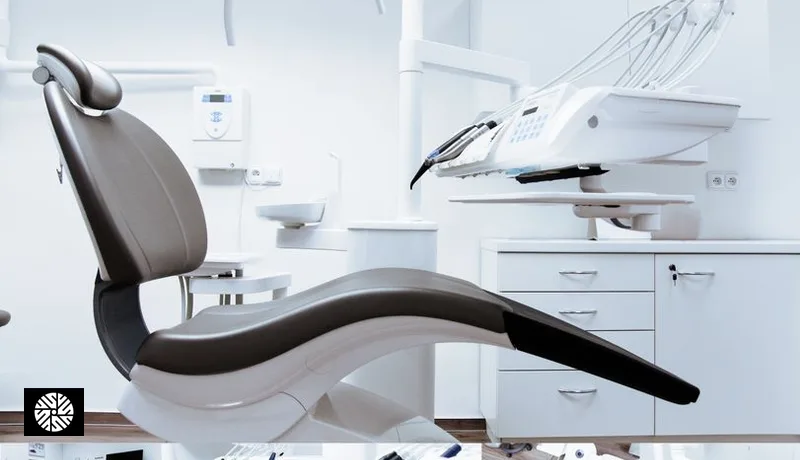
This is the single most important thing to get right, and dental is a little different from the rest of Taiwan's healthcare, so pay attention here. For almost everything that can go wrong with your teeth on a trip — a toothache, a cavity, a cleaning, a filling that fell out, a lost crown, a chipped tooth, even most extractions — your destination is a dental clinic (牙醫診所, yá yī zhěn suǒ), not a hospital. Taiwan's dental care is overwhelmingly clinic-based. These are small, private, independent practices, and they are everywhere. This is a real departure from how the rest of Taiwanese medicine works, where the big multi-tier hospitals do a lot of the heavy lifting (we break that whole system down in our guide to Taiwan's hospital tiers, from neighborhood clinics to medical centers). For teeth, you mostly skip the hospital tier-climbing entirely and just find a good clinic.
You'd go to a hospital dental department instead in a narrower set of cases: oral surgery, a complicated impacted wisdom tooth, facial trauma involving the jaw, or when a tooth problem has turned into a spreading infection that needs more than a dentist can offer in a single chair. Big hospitals have dental and oral-maxillofacial departments, and crucially they're more likely to have English-speaking staff and weekend coverage.
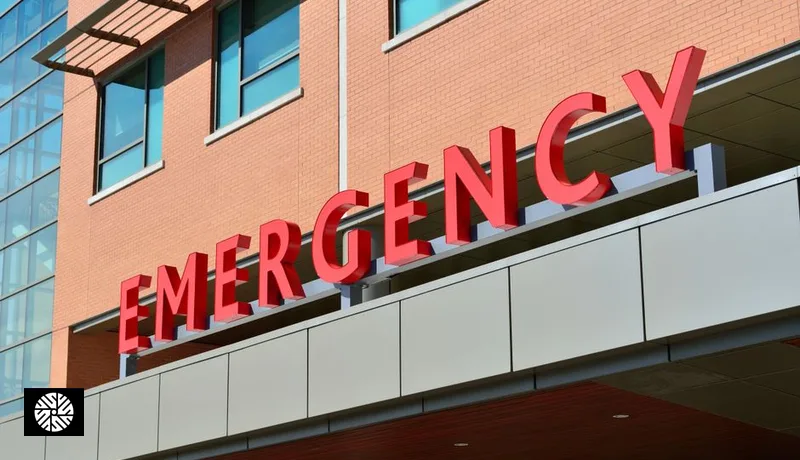
And then there's the emergency room, which deserves its own honest paragraph because people both over- and under-use it for teeth. The ER is not a dentist. It will not do a root canal or rebuild your crown. What an ER can do is manage the dangerous parts of a dental emergency — drain an abscess, give you antibiotics for a serious infection, and control pain — and that's exactly when you should go. The red flags that turn a toothache into an ER trip are: significant facial, jaw, or neck swelling; difficulty swallowing or breathing; a high fever alongside the tooth pain; or trauma to the face. Swelling that's tracking down toward your neck or throat is a "go now, don't wait until morning" situation, because a dental infection that reaches the airway is genuinely serious. If you're at that point, call 119 — that's Taiwan's number for ambulance and fire, not 911 — or get yourself to the nearest hospital ER. We've written a full guide to using the emergency room in Taiwan as a foreigner if you want the broader playbook on how ERs there actually work.
The walk-in mechanics: registering at the 掛號 counter
Say it's the normal, non-emergency case — you've got a throbbing tooth or a crown sitting in a tissue in your pocket, and you've found a dental clinic. Here's how the visit unfolds, because the order of operations is the part that feels alien.
You start at the 掛號 (guà hào) counter — "registration." Walk in and tell them you'd like to be seen; "guà hào" is the magic word, and a translation app or even just showing them the characters works fine. Because you're a first-time patient and a foreigner, they'll ask you to fill out a short registration form and they'll want your passport (for short-term visitors without a local ID, your passport is your identity document). On this first visit you're registering as a brand-new patient in their system. Many clinics do take walk-ins, but here's the honest nuance: because dental work is appointment-friendly, calling ahead or booking a slot — even same-day — often saves you a long wait, and some busier clinics run mostly on appointments. Same-day walk-in care absolutely exists and is common; it's just not guaranteed at every door the way it is at a general 診所.
Once you're registered, you take a number ticket and wait for your turn. There's usually a small digital call-up board showing which number is currently being seen. It's in Mandarin numerals, but it's visual and easy to track — your number is on your ticket, you watch the board, and when it comes up you go in. If you're ever unsure, the front desk will wave you in. This same number-and-board rhythm is how nearly all Taiwanese outpatient care runs; we cover it end to end in our guide to seeing a doctor in Taiwan.
Seeing the dentist — and the language question
When your number's up, you'll be taken to the dentist's chair. A couple of things will stand out to anyone used to Western dentistry. First, it's efficient — Taiwanese dental visits tend to be focused and relatively quick, sometimes surprisingly so. That's not a sign of being rushed or low-quality; it's just the pace. Second, the dentist may well take an X-ray right there in the same visit if your problem calls for one, look at it, and start treatment immediately. There's no booking a separate imaging appointment for next week.
On English: be realistic and you won't be caught out. At large hospital dental departments and at clinics that explicitly market to international patients, English is common and often excellent. At a random neighborhood 牙醫診所, it's hit-or-miss — the dentist may have decent textbook English, or you may be navigating with gestures and a phone. A translation app is your best friend here; type out your symptom ("the pain started two days ago," "this crown came off," "I'm allergic to penicillin") before you go in, and don't be shy about pointing at the exact tooth. Dentists are very used to this. If language is a real worry for you, lead with one of the English-friendly options I'll get to below.
The big reversal: you pay AFTER, at the 批價 cashier
This is the moment that surprises nearly every first-timer, so brace for it: you don't pay up front. You see the dentist and get treated first, and only afterward do you go to the 批價 (pī jià) cashier to settle the bill. Coming from systems where you hand over a card or a co-pay before anyone touches you, it feels almost too trusting. It's just how Taiwan does it — care first, payment after.
If the dentist prescribed medication (an antibiotic for an infection, or painkillers, say), you collect it afterward at the 領藥 (lǐng yào) pharmacy window — sometimes inside the clinic, sometimes at a pharmacy next door. So the full loop is: register at 掛號 → take a number → see the dentist → pay at 批價 → pick up meds at 領藥. And to repeat the headline point because it matters: no referral is required to walk into a dental clinic or to go to a hospital dental department. You can self-refer to a specialist directly, which is a small superpower when you're in pain in an unfamiliar country.
NHI dental vs. self-pay: what you'll actually be charged
Here's where being a short-term visitor changes the math. Taiwan's National Health Insurance (NHI) covers a remarkable amount of dental work for the people enrolled in it — locals and longer-term residents pay a tiny fixed co-payment (on the order of NT$50) for a covered dental visit, and the NHI covers two cleanings a year, fillings for cavities that haven't reached the nerve, and medically necessary extractions like impacted wisdom teeth. It's one of the quiet wonders of the system.
But — and this is the load-bearing "but" for a traveler — you almost certainly don't have an NHI card. NHI enrollment generally requires residency (broadly, a stretch of continuous residence on a resident permit before you can join), which a tourist or short-stay business visitor doesn't have. So as a short-term visitor you'll be paying self-pay (自費, zì fèi) — the full out-of-pocket price — for everything. The genuinely reassuring part is that Taiwan's self-pay dental prices are still very low by Western standards. You're paying the "expensive" rate and it's still a fraction of what an emergency dental visit costs in the US, UK, or Australia.
What a cleaning, filling, or extraction roughly costs (approximate — confirm on site)
I want to be careful here, because dental pricing varies a lot by clinic, by city, by how much imaging is involved, and by how complex your specific tooth turns out to be. Treat every number below as a rough ballpark to be confirmed at the clinic before treatment, not a quote. Always ask "how much will this cost?" — written down or via app — before you agree to the work.
- A self-pay specialist or problem-focused dental visit broadly runs somewhere in the region of NT$1,500–5,000 (roughly US$45–155) depending on the clinic tier and whether X-rays and a procedure are involved. Simpler visits sit at the low end; anything with imaging plus treatment pushes higher.
- A basic check-up with an X-ray and a light cleaning can be quite cheap on a self-pay basis — travelers have reported figures around the NT$1,000 mark — though again this swings by clinic.
- A filling is generally one of the more affordable treatments and typically lands below the cost of a crown or extraction, but the exact price depends on size, material, and location.
- An extraction ranges widely. A simple extraction is modest; a surgical or impacted wisdom-tooth extraction is more involved and more expensive — for a self-pay wisdom tooth, foreigners have cited figures in the rough neighborhood of a couple hundred US dollars. Confirm with the specific clinic.
One more practical money note: keep your itemized receipts. If you have travel or international health insurance, an itemized, dated receipt is what lets you claim the cost back later. Ask the 批價 cashier for one. Note too that any cosmetic or elective dentistry is a different world of pricing entirely — a crown for aesthetic reasons can run into the NT$20,000–30,000+ range — and that's not what this article is about. If you came to Taiwan specifically for dental work rather than to fix an emergency, that's the cosmetic side, and we cover it separately in our guides to veneers and crowns in Taiwan for medical travelers, Invisalign and orthodontics for international patients, and how Taiwan trains and regulates its dentists.
Dental emergencies: broken tooth, abscess, knocked-out tooth
Acute problems are why most travelers end up at a Taiwanese dentist in the first place, so let's get specific about the scary ones.
A broken or chipped tooth is usually urgent-but-not-an-emergency. If it's not bleeding heavily and you're not in severe pain, you can get to a dental clinic the same day or next morning rather than the ER. Save any large fragment, avoid chewing on that side, and rinse gently with warm water.
A dental abscess — a pocket of infection, often felt as a deep, throbbing pain with a swollen gum or face — needs prompt care because dental infections can spread. A dentist can drain it and prescribe antibiotics. But if the swelling is significant and spreading toward your jaw, neck, or eye, if you have a fever, or if you're having any trouble swallowing or breathing, that crosses into ER territory — go immediately and call 119 if you need an ambulance. An ER can drain the abscess, give IV antibiotics, and manage the danger even though it can't do the definitive dental fix.
A knocked-out (avulsed) permanent tooth is the most time-critical dental emergency there is, and what you do in the first hour genuinely determines whether the tooth can be saved. General first-aid guidance: pick the tooth up by the crown (the white part), not the root; don't scrub it clean; and if you can, gently place it back into its socket and bite down softly on a clean cloth to hold it. If you can't reinsert it, store it in milk — or tucked inside your cheek using your own saliva — but not in plain water, which damages the delicate root cells. Then get to a dentist or hospital as fast as possible. Time is the whole game here.
Finding an English-speaking dentist
You don't have to gamble on language. A few reliable routes:
- The AIT directory. The American Institute in Taiwan (the de facto US embassy) publishes a regularly updated list of physicians, dentists, and medical providers — organized by region (Taipei, Kaohsiung, and so on) — and the providers on it speak English. It's compiled for the American community but it's freely available and useful to any traveler. It's one of the most trustworthy starting points for an English-speaking dentist.
- Hospital international patient centers. Larger hospitals, especially the major ones in Taipei, Taichung, and Kaohsiung, run international medical service centers with English-speaking coordinators who can route you to the dental department and help with the paperwork and payment. If English is your top priority and you're not sure where to start, a big hospital's international center is the safe default.
- Clinics that market to internationals. Some private dental clinics explicitly serve expats and medical travelers and have fully English-speaking teams. They tend to be a touch pricier and more appointment-based, but the communication is frictionless.
For the broader picture of how to find any English-speaking care and navigate the system as a foreigner, our complete guide to seeing a doctor in Taiwan is the pillar piece worth bookmarking. And if your "tooth" problem turns out to be sinus or jaw-referred pain — it happens more than you'd think — our guide to seeing an ENT doctor in Taiwan covers that adjacent path.
Common scenarios on your trip
To make this concrete, here are the situations travelers actually run into:
- "A filling fell out / my crown came off." Not an emergency. Find a dental clinic, walk in or book a same-day slot, bring the crown if you still have it. The dentist can often re-cement or rebuild it the same visit. Self-pay, modest cost.
- "I want a cleaning while I'm here because it's so cheap." Totally reasonable and common. Book a clinic; expect to self-pay a low rate. Just remember the NHI's two-free-cleanings perk applies to enrolled residents, not visitors — you'll pay out of pocket, but it's still inexpensive.
- "I've had a dull toothache for two days." See a dentist soon rather than waiting it out, since toothaches rarely improve on their own. Same-day clinic visit, X-ray likely, treatment likely. Watch for it escalating into swelling or fever — that changes the plan.
- "My face is swelling and I have a fever." This is the line. Treat it as urgent, go to a hospital or ER, and call 119 if it's severe or you're struggling to swallow or breathe. Don't sleep on facial swelling from a tooth.
- "My tooth got knocked out playing basketball." Crown-not-root, milk or saliva, reinsert if you can, and get to a dentist or hospital within the hour. This one's a race.
- "Can I just refill my prescription at a pharmacy?" No — and this catches people out. Taiwanese pharmacies will not fill a foreign prescription. If you need a medication, you have to see a local dentist or doctor who can assess you and write a Taiwan prescription. Plan around this if you take something regularly.
What to bring and a few last reassurances
Pack light for the visit but pack the right things: your passport (your ID as a visitor), both a payment card and some cash (smaller or older clinics may be cash-only, and you don't want to discover that at the 批價 counter), and your insurance details if you have travel or international cover. Keep every itemized receipt for claims. A translation app with your symptoms pre-typed will smooth out almost any language gap.
And the genuinely reassuring bottom line: Taiwanese dentistry is high-quality, abundant, and cheap even at the self-pay rate, the walk-in culture means you're rarely more than a short distance from a dental chair, and you don't need a referral or a local insurance card to be seen. The only things that turn a bad-tooth day into a real problem are not knowing the pay-after rhythm, not knowing when swelling means "ER, now," and not knowing that 119 — not 911 — is the number you dial. Now you do. Once you've navigated it once, the next time barely registers as stressful at all.
Sources & Further Reading
- National Health Insurance Administration (Taiwan) — dental health coverage program
- American Institute in Taiwan — list of English-speaking physicians, dentists and medical providers
- New Dawn Health — How to See a Doctor in Taiwan: A Complete Guide for Foreigners
- New Dawn Health — Using the Emergency Room in Taiwan: A Foreigner's Guide
This article is general information for travelers, not medical advice. Prices are approximate and change; confirm with the clinic and your insurer. In a dental emergency, seek care promptly; for a medical emergency call 119.
US / UK terms and the closest Taiwan context
Read this first: These are comparison aids, not claims that coverage, credentials, or care pathways are equivalent. Europe is not one health system; UK examples below refer specifically to NHS England.
PCP / primary care provider; GP / general practitioner
- What it means there
- In the US, a primary care provider may provide prevention, common-illness care, and care coordination. In NHS England, a registered GP commonly coordinates access to non-emergency specialist care.
- Closest Taiwan context
- The closest starting point is a community clinic or family medicine department (基層診所/家庭醫學科).
- Do not treat as equivalent
- Taiwan does not use one universal PCP or GP gatekeeping model. NHI promotes community-first, tiered care, but its referral policy does not make a referral a universal prerequisite to every hospital visit.
- What to ask
- Ask whether this visit is the right first contact, whether direct specialist registration is accepted, and whether a referral changes the appointment or NHI copayment.
Referral
- What it means there
- A US plan, especially an HMO, may require a PCP referral for coverage. In NHS England, specialist hospital care is generally accessed through a GP referral.
- Closest Taiwan context
- Taiwan uses a referral form and two-way referral process (轉診/雙向轉診) when clinical needs call for another facility or level of care.
- Do not treat as equivalent
- A US insurance referral, an NHS clinical access route, and a Taiwan NHI referral do not create the same rights or payment result. Taiwan NHI says referral need not proceed one hospital level at a time and does not universally prohibit direct hospital visits.
- What to ask
- Ask who issues the referral, its validity period, the named facility and department, whether registration is arranged, and what happens to the copayment.