
Here's the thing nobody warns you about before a trip to Taiwan: the island's heat and humidity will do things to your skin you've never had to deal with at home. You step off the plane, and within 48 hours there's an angry red patch behind your knees, or a cluster of bites that won't stop itching, or a sweaty rash blooming under your backpack straps. The good news — and this is genuinely good news — is that seeing a dermatologist (皮膚科, pí fū kē) in Taiwan is fast, cheap, and far less of an ordeal than it would be back in a Western system. Once you understand how the process works, you can walk into a skin clinic, see a board-certified doctor, and walk out with prescription-strength cream the same morning, often for less than the cost of a nice dinner. The trick is knowing where to go and what to expect.
This guide is about medical dermatology — heat rash, allergic reactions, eczema flares, fungal and bacterial infections, sunburn, insect bites. If you are considering lasers, injectables, or anti-aging procedures, see the separate guides to laser skin treatments in Taiwan, Botox and fillers, and the skin-treatment consultation checklist. Cosmetic procedures require a different assessment, consent, and follow-up plan.
Why Taiwan's Climate Wrecks Traveler Skin
Taiwan is subtropical, and in summer it is properly hot and humid — the kind of wet heat where you're damp the moment you leave an air-conditioned room. Your skin isn't used to it, and that mismatch triggers a predictable cluster of problems. Understanding what's happening helps you decide whether you need a pharmacy or a doctor.
Heat rash (prickly heat). This is the classic. When you sweat heavily and the sweat ducts get blocked, you get small red bumps or tiny blisters — often on the neck, chest, back, or anywhere clothing traps moisture. It stings or prickles, hence the name. According to the Mayo Clinic, the fix is mostly to cool and dry the skin — air conditioning, loose cotton clothing, and not letting sweat sit. Most mild heat rash clears on its own once you cool down. You generally don't need a dermatologist for it unless it's widespread, painful, or looks infected.
Fungal infections. Warm, damp skin is paradise for fungus. Athlete's foot, jock itch, and ringworm-type rashes flare fast in Taiwan's climate, especially if you're walking all day in closed shoes or sweating through your clothes. These show up as itchy, scaly, sometimes ring-shaped patches that spread. They respond to antifungal creams, many of which you can buy over the counter — but a stubborn or spreading one is worth a doctor's visit for a stronger prescription.
Insect bites. Taiwan has mosquitoes, and they are enthusiastic. Bites can swell more than you're used to, and scratching them open in humid weather invites a secondary bacterial infection. The CDC's travel guidance on avoiding bug bites is the best prevention playbook — use an EPA-registered repellent with DEET, picaridin, IR3535, or oil of lemon eucalyptus, wear loose long sleeves, and treat the bite before you claw it raw.
Eczema flares and sunburn. If you already have eczema, the heat, sweat, and unfamiliar water can set it off. And the subtropical sun is stronger than many visitors expect — a day at Kenting or up Taipei 101's observation area can leave you burnt. Both are manageable, but a bad eczema flare is exactly what a dermatologist handles well.
When a Skin Reaction Is an Emergency — Not a Clinic Visit
This is the most important section in the article, so read it before anything else. Most skin problems on a trip are annoying, not dangerous. But a small number are medical emergencies, and the difference is whether your airway is involved.
If you have a severe allergic reaction — swelling of the face, lips, tongue, or throat, trouble breathing or swallowing, a spreading whole-body hives outbreak, dizziness or feeling like you might pass out — that is anaphylaxis, and you call 119 immediately. Not a clinic. Not a pharmacy. 119 is Taiwan's emergency number for ambulance and fire — it is not 911, so program it into your head now. If you carry an EpiPen for known allergies, use it and still call 119.
A language tip that matters in a panic: if you can't get a Mandarin speaker on the line, the American Institute in Taiwan's emergency-numbers page notes that 112 is the international emergency line that works even with no SIM or poor reception, with English instructions — useful for travelers. For anything life-threatening, dial first and sort out language second.
The American Academy of Dermatology draws the same line: trouble breathing or swallowing, or swelling of the eyes or lips, means seek emergency care immediately. Short of that, signs a rash needs a doctor (but not the ER) include a rash that blisters, is painful, is spreading rapidly, or shows infection — pus, yellow or golden crusts, warmth, swelling, or fever. That's your cue to find a dermatology clinic, which is what the rest of this guide walks you through. For the full picture of when to go to the emergency room in Taiwan versus a clinic, see our dedicated emergency room guide for foreigners.
Clinic vs. Hospital vs. ER — Where to Actually Go
For a skin problem, your default should almost always be a dermatology clinic (診所). Taiwan is dense with small, specialized neighborhood clinics, and skin clinics are everywhere in cities. They're fast, walk-in-friendly, cheaper than hospitals, and the doctor is a dermatology specialist. For a rash, a bite gone bad, a fungal infection, or an eczema flare, this is exactly the right level of care.
A hospital dermatology department may be appropriate for a complex case or when hospital-based testing is needed. English support, appointment access, services, and fees vary; confirm them directly rather than assuming they are available. We describe the general care settings in our guide to Taiwan's hospital tiers, from clinics to medical centers.
The ER is only for the emergencies above — anaphylaxis, a severe reaction, a high fever with a spreading infection. Do not sit in an emergency room for an itchy rash; you'll wait, and you'll pay more. Crucially, in Taiwan you do not need a referral to see a dermatologist. You don't visit a GP first to get permission. You just go straight to the skin clinic — which is faster and simpler than the gatekept systems many Western travelers are used to.
The Process, Step by Step
Here's where Taiwan feels alien the first time and obvious every time after. The flow is the same whether you're at a clinic or a hospital, and it runs in a specific order that's different from the West: you pay at the end, not the beginning.
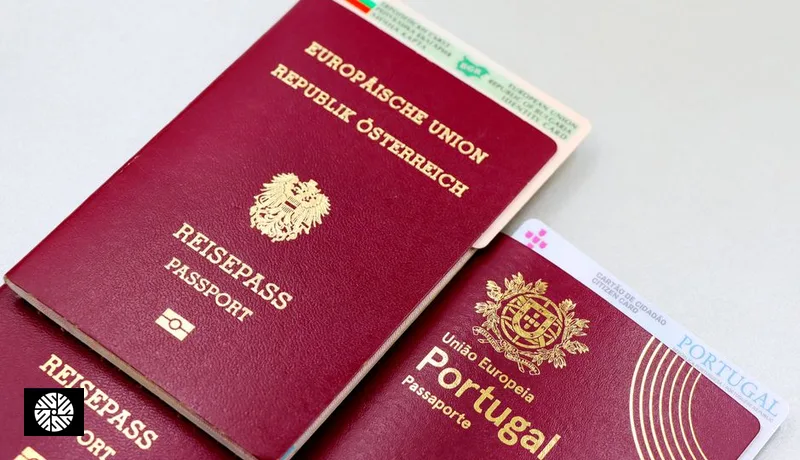
1. Register at the 掛號 (guà hào) counter or kiosk. The first thing you do on arrival is register at the 掛號 desk — that word literally means "register." On your first visit you fill out a short form with your passport details, and they create a chart for you. Bring your passport; you'll need it because as a short-term visitor you won't have a National Health Insurance card. Tell them you want 皮膚科 (dermatology). Some larger hospitals have self-service kiosks, but at a small clinic it's a human at a desk.
2. Take a number ticket. Registration gets you a number. Taiwan runs on a numbered queue system — you're not called by name, you're called by number.
3. Watch the call-up board. There's a digital display showing the current number being seen. It's in Mandarin, but it's visual — you're just matching digits — so you don't need to read Chinese to follow it. Find a seat, watch the board, and listen for the chime. If you're unsure, show your ticket to staff and they'll point you to the right waiting area.
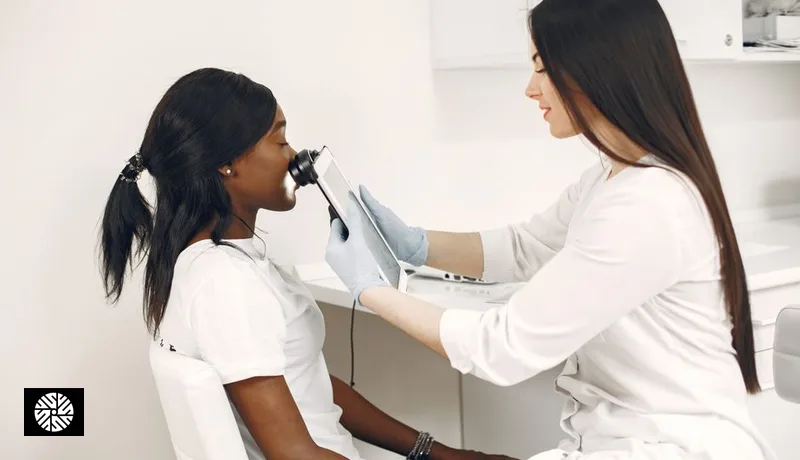
4. See the doctor. Taiwanese consultations are efficient — often genuinely short by Western standards, because the system runs at high volume and the doctors are experienced. A dermatologist can diagnose most common rashes, bites, and infections on sight. English varies a lot: some doctors are fluent, others less so. A translation app on your phone is your friend — have it ready, and consider photographing the rash earlier when it looked worse, since skin can change between when it flared and when you're finally in the chair. Describe when it started, what it felt like, and anything you think triggered it.
5. Tests the same visit, if needed. If the doctor wants a closer look — a skin scraping to confirm a fungal infection, for example — it's usually done right there or down the hall, same visit. You don't book a separate appointment for another day the way you often would back home.
6. Pay AFTER at the 批價 (pī jià) cashier, then collect meds at 領藥 (lǐng yào). Once the doctor's done, you go to the 批價 cashier to pay — this is the part that throws Westerners, who expect to settle up front. Then you take your prescription to the 領藥 pharmacy window, usually in the same building, and pick up your medication. One stop, one building, done. For a fuller walkthrough of this exact sequence across any specialty, our complete guide to seeing a doctor in Taiwan maps every counter and covers the whole system.
What It Costs Without an NHI Card
As a short-term visitor, you don't have Taiwan's National Health Insurance, so you'll pay self-pay (自費, zì fèi) — the full out-of-pocket rate. The reassuring part: even self-pay, Taiwanese dermatology is inexpensive by Western standards. A self-pay specialist visit broadly runs around NT$1,500 to NT$5,000 (roughly US$45 to US$155) depending on the tier of facility, with simpler clinic visits at the lower end and hospital or international-center visits higher. A straightforward rash check at a neighborhood skin clinic can land well under that range, while a hospital visit with testing climbs toward it. Note that some major hospitals apply a surcharge to foreign self-pay patients without NHI.
These figures are approximate and change — confirm the price on site before you commit, especially at hospitals. Medication is billed separately at the pharmacy window and is typically cheap. A few practical money points: bring both a card and cash (smaller clinics may be cash-preferred), bring your passport for registration, and bring your travel insurance details. Keep your itemized receipts — you'll need them to claim reimbursement from your insurer back home, and Taiwanese clinics will provide them if you ask.
Prescription-Strength vs. What a Pharmacy Can Sell You
A genuinely useful thing about Taiwan: a lot of what you'd need a prescription for elsewhere, you can buy over the counter at a pharmacy (藥局, yào jú), or at chains like Watsons and Cosmed. Mild hydrocortisone creams, antihistamine creams for bites and itching, basic antifungal creams, antiseptics, and calamine-type lotions are widely available and cheap. For a mild heat rash, a few itchy bites, or a small patch of athlete's foot, a pharmacy visit may be all you need — no doctor required.
Where the doctor earns their fee is prescription-strength treatment. Stronger topical steroids for a serious eczema flare, oral antihistamines or steroids for a bigger allergic reaction, prescription antifungals for an infection that won't quit, and oral antibiotics for a bite or rash that's become bacterially infected — these need a dermatologist's diagnosis and prescription. The AAD's rash guidance is a sensible self-triage tool: if a rash doesn't improve, keeps coming back, spreads, or shows signs of infection, stop self-treating and see a doctor.
One hard rule worth tattooing on your travel brain: Taiwanese pharmacies will not fill a foreign prescription. Taiwan has no mutual-recognition agreement for prescriptions written abroad, so the bottle from your doctor at home won't get you a refill here. If you take a prescription skin medication regularly, bring enough for the whole trip plus a buffer. If you run out, you'll need to see a local doctor to get a Taiwanese prescription — which, given how fast and cheap the clinic visit is, isn't the disaster it sounds like, but it's an extra step you can avoid with planning.
Common Scenarios on Your Trip
"I've got an itchy red rash on my neck and chest after a sweaty day." Most likely heat rash. Cool down, get into air conditioning, switch to loose cotton, and try a calamine or mild OTC cream from a pharmacy. If it doesn't settle in a couple of days, looks infected, or spreads, see a 皮膚科 clinic.
"My bug bites are huge, hot, and one looks like it's got pus." A bite that's warm, swollen, oozing, or crusting yellow may be infected and is a clinic visit — you may need a prescription antibiotic. Don't keep scratching it open in the humidity.
"My eczema is flaring badly and my usual cream isn't touching it." Go to a dermatology clinic for a prescription-strength steroid. Remember your home prescription can't be refilled here, so the clinic visit is the route to relief.
"There's an itchy, spreading, ring-shaped patch." Sounds fungal. An OTC antifungal cream may handle a small one; a spreading or stubborn patch warrants a doctor and a stronger prescription, possibly after a quick skin scraping.
"My face, lips, or throat are swelling and I'm struggling to breathe." This is not a clinic decision. Call 119 immediately. This is the emergency scenario from earlier in the article — treat it as one.
The bottom line: for the everyday skin problems Taiwan's climate throws at travelers, the system is fast, affordable, and refreshingly direct — walk into a skin clinic, register, see a specialist, pay after, collect your cream. No referral, no gatekeeping. Save the ER for the genuine emergency, keep 119 in your head, and you'll be fine.
Sources & Further Reading
- American Institute in Taiwan — Local Emergency Numbers (119, 112)
- American Academy of Dermatology — Signs Your Rash Needs Medical Attention
- American Academy of Dermatology — Rash 101: When to Seek Medical Treatment
- CDC Travelers' Health — Avoid Bug Bites
- Mayo Clinic — Heat Rash: Symptoms & Causes
- National Health Insurance Administration, Taiwan (nhi.gov.tw)
- New Dawn Health — How to See a Doctor in Taiwan: Complete Guide for Foreigners
- New Dawn Health — Emergency Room in Taiwan: A Guide for Foreigners
This article is general information for travelers, not medical advice. Prices are approximate and change; confirm with the clinic and your insurer. For signs of a severe allergic reaction — swelling of the face or throat, trouble breathing — call 119 immediately.
US / UK terms and the closest Taiwan context
Read this first: These are comparison aids, not claims that coverage, credentials, or care pathways are equivalent. Europe is not one health system; UK examples below refer specifically to NHS England.
PCP / primary care provider; GP / general practitioner
- What it means there
- In the US, a primary care provider may provide prevention, common-illness care, and care coordination. In NHS England, a registered GP commonly coordinates access to non-emergency specialist care.
- Closest Taiwan context
- The closest starting point is a community clinic or family medicine department (基層診所/家庭醫學科).
- Do not treat as equivalent
- Taiwan does not use one universal PCP or GP gatekeeping model. NHI promotes community-first, tiered care, but its referral policy does not make a referral a universal prerequisite to every hospital visit.
- What to ask
- Ask whether this visit is the right first contact, whether direct specialist registration is accepted, and whether a referral changes the appointment or NHI copayment.
Referral
- What it means there
- A US plan, especially an HMO, may require a PCP referral for coverage. In NHS England, specialist hospital care is generally accessed through a GP referral.
- Closest Taiwan context
- Taiwan uses a referral form and two-way referral process (轉診/雙向轉診) when clinical needs call for another facility or level of care.
- Do not treat as equivalent
- A US insurance referral, an NHS clinical access route, and a Taiwan NHI referral do not create the same rights or payment result. Taiwan NHI says referral need not proceed one hospital level at a time and does not universally prohibit direct hospital visits.
- What to ask
- Ask who issues the referral, its validity period, the named facility and department, whether registration is arranged, and what happens to the copayment.