
Taiwan has quietly become one of Asia's most trusted destinations for medical aesthetics — picosecond lasers, injectables, skin rejuvenation, and surgery delivered by well-regulated clinics at prices that make the flight pencil out. But knowing Taiwan is a good place to go is different from knowing how a visit actually works: when to book, what happens at the consultation, how long to leave for recovery, and when you're cleared to fly home. This is the process walkthrough — the flow of an aesthetics visit from your first email to your last aftercare check — so you can plan a trip around it instead of improvising on the ground.
If you're still choosing which treatment or which clinic, those are covered elsewhere: see our guides to laser skin treatments, Botox and fillers, and guide to Taiwan medical beauty. This article assumes you've roughly decided what you want and answers the next question: how does the visit itself unfold?
Step 1 — Research and book a consultation before you fly
The single biggest difference between a smooth aesthetics trip and a stressful one is doing the consultation work before you land. Reputable clinics that cater to international patients let you start remotely — by email, LINE, or web form — sharing photos, your goals, and your travel dates so they can advise on what's realistic and how much time to budget.
Two things to confirm at this stage. First, language: ask explicitly whether an English-speaking coordinator and an English-speaking doctor will be available for your appointment. International-facing clinics in Taipei routinely provide this, but you want it confirmed, not assumed. Second, timing: tell them your exact dates so they can fit the treatment — and any downtime — into your itinerary rather than scheduling something that leaves you swollen on your flight home.
Step 2 — The consultation
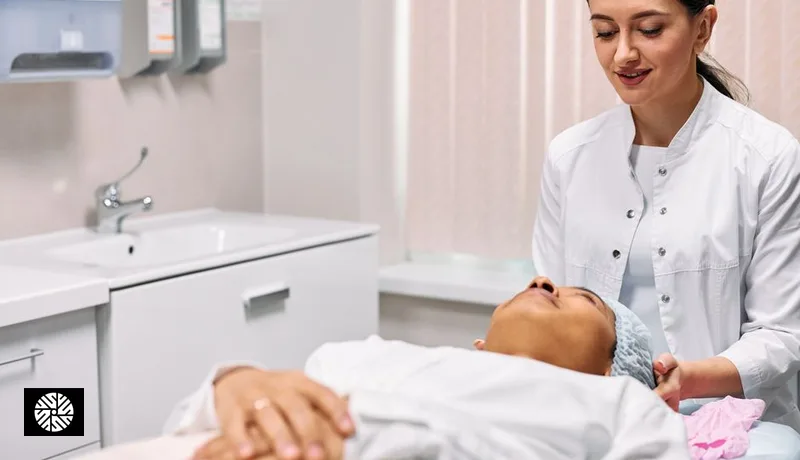
The in-person (or sometimes video) consultation is the heart of the process, and a good clinic treats it as a genuine medical assessment, not a sales pitch. Expect the doctor to examine your skin or the treatment area, ask about your medical history, medications, allergies, and previous procedures, and talk through what's achievable. Taiwanese aesthetic medicine leans toward natural-looking, conservative results, so a trustworthy doctor may talk you out of overdoing it.
This is where you align on goals and expectations: what the treatment can and can't do, how many sessions it may take, the realistic recovery, and the risks and possible side effects. You should leave the consultation with a written treatment plan and a transparent quote — itemized, with no vague "we'll see on the day" pricing. If something isn't clear, ask; reputable clinics expect questions from international patients and answer them patiently.
Step 3 — The treatment
What "the treatment" involves depends heavily on whether it's non-surgical or surgical, and that distinction drives your whole trip plan:
- Non-surgical treatments — injectables (Botox, fillers), most lasers, microneedling, and skin rejuvenation — are typically done in a single outpatient appointment with little to no downtime. You might have redness, mild swelling, or tiny marks for a few hours to a few days, but you're generally functional immediately. Some treatments are done under topical numbing cream applied beforehand.
- Surgical procedures — eyelid surgery, facelifts, and the like — are a bigger commitment: a longer appointment, possible sedation or anesthesia, stitches, and a real recovery window before you look and feel normal.
Whichever you're having, the clinic should brief you on exactly what happens during the appointment and what to expect immediately afterward. Taiwan regulates aesthetic medicine strictly, with an emphasis on safety, so don't be surprised by thorough consent paperwork and pre-treatment checks — that rigor is a feature, not friction.
Step 4 — Aftercare and recovery
Aftercare is where planning pays off. Before you leave, the clinic should walk you through side effects to expect and aftercare instructions — how to care for the treated area, what products to use or avoid, sun protection, and warning signs that mean you should call them. For laser and microneedling specifically, the pre- and post-treatment care matters a lot; our aftercare guide goes deep on that.
Recovery timelines vary by procedure. Non-surgical treatments may need only a day or two of gentle care. Surgical procedures commonly involve stitch removal around 7–10 days after the operation, plus follow-up checks — which is why surgery is something you plan a longer stay around, not a same-week-fly-home treatment. Crucially, for anything significant your doctor should give you an explicit "clear to fly" sign-off, because flying too soon after some procedures carries real risk. Don't book your return flight tight against your treatment date until the clinic confirms the timeline.
Costs and paying
Medical aesthetics are self-pay — elective and not covered by insurance — so cost is whatever the clinic quotes, which is exactly why the written estimate from your consultation matters. Prices vary widely by treatment, the technology used, and how many sessions you need, so we keep specifics in the treatment-by-treatment guides rather than quoting a single misleading number here: see laser pricing and injectable pricing for current ranges. The headline that draws travelers is simply that Taiwan's quality-to-price ratio is excellent compared with the US, Europe, or even some regional neighbors. Confirm the total at consultation, ask what's included, and keep the receipt.
Timing your trip around the treatment
The recovery window is the variable that should drive your itinerary, not the other way around. A few planning rules:
- Front-load the treatment. Schedule it early in your trip so any redness or swelling has settled before you fly home — and so there's buffer for a follow-up if needed.
- Leave room for downtime. Even "no downtime" treatments can leave you camera-shy for a day; surgery needs far more. Match the procedure to how much of your trip you're willing to spend recovering.
- Don't schedule big treatments right before big plans. Save the beach day, the wedding, or the long-haul flight for after you're cleared, not the day after a procedure.
Our guide to combining cosmetic treatments and travel in Taiwan goes further on building an itinerary that gives your skin time to recover while you still enjoy the trip.
Safety, credentials, and what makes Taiwan different
The reassuring part of the Taiwanese system is the oversight behind it. Aesthetic medicine is regulated by the Ministry of Health and Welfare (MOHW), and hospitals and many clinics are accredited through the Joint Commission of Taiwan (醫策會), the country's healthcare quality body. International-patient programs at major institutions add another layer of structure — coordinators who help with scheduling, translation, and sometimes even visa, transport, and accommodation logistics.
Your job as a patient is to make sure the specific clinic you choose lives up to that system: a licensed, qualified doctor performing the procedure; genuine before/after evidence; clear consent and aftercare; and English-language support that extends beyond the sales conversation into the medical one. Our deep dive on why Taiwan is a top destination for medical beauty is the checklist for that.
Quick reference: the visit in one line
Book a consultation before you fly → confirm English support and dates → in-person assessment with a written plan and quote → treatment (non-surgical = little downtime; surgical = stitches ~7–10 days) → aftercare instructions and a doctor's clear-to-fly sign-off. Schedule the treatment early in your trip, leave room to recover, and choose an MOHW-regulated, properly credentialed clinic with real international-patient support.
Sources & Further Reading
- Ministry of Health and Welfare (MOHW), Taiwan — regulation of medical institutions and aesthetic medicine.
- Joint Commission of Taiwan (醫策會 / TJCHA) — hospital and clinic accreditation standards.
- Taipei Medical Tourism and hospital international medical center resources — international-patient processes for aesthetic care.
- New Dawn Health treatment guides — Laser Skin Treatments, Botox & Fillers, Why Taiwan for Medical Beauty, and the Aftercare Guide.
This article is general information for travelers, not medical advice. Aesthetic treatments carry risks; outcomes, recovery times, and prices vary by individual and clinic — rely on your treating doctor's assessment and aftercare instructions, and confirm you are cleared before flying.