Blog
Blog
Taiwan Festivals You Can't Miss in 2026

Taiwan runs on festivals. From the lunar calendar's biggest week-long shutdown to indigenous harvest ceremonies on the east coast, the cultural calendar shapes everything — flight prices, hotel availability, hospital schedules, and the texture of daily life. For travellers planning a screening trip, knowing the festival rhythm is the difference between a smooth booking and a frustrating week of closed clinics. For travellers who want more than a checkup, timing your visit around the right festival can turn a medical trip into a once-in-a-lifetime cultural experience.
This guide walks through Taiwan's major 2026 festivals — what they are, where they happen, when to arrive, and how each one affects screening trip planning. We've also flagged the combinations that work brilliantly (Lantern Festival plus a Taipei screening, Hot Spring Festival plus Beitou imaging) and the windows you absolutely should avoid (Lunar New Year, Tomb Sweeping). Pair this with our weather guide and itinerary planner to lock in the right week.
Taiwan's festival calendar at a glance
Taiwan's festival year is a blend of Han Chinese lunar tradition, indigenous ceremony, religious procession, and modern secular events. Some are public holidays that shut down hospitals and government offices. Others are regional spectacles that fill specific cities for a weekend but leave the rest of the island operating normally. Knowing which is which is the foundation of good trip planning.
Below is the month-by-month overview for 2026. Dates marked "lunar" shift each year because they follow the lunisolar calendar, so always verify against the current year's official tourism announcements before booking.
| Date (2026) | Event | Region | Screening impact |
|---|---|---|---|
| Feb 17 (lunar) | Lunar New Year (春節) | Nationwide | Avoid — full week shutdown |
| Feb-Mar | Cherry blossom season | Yangmingshan, Alishan | No impact — beautiful add-on |
| Mar 3 (lunar) | Lantern Festival / Pingxi | Pingxi, Taipei, rotating host city | No impact — single evening event |
| Mar-Apr (9 days) | Mazu Pilgrimage (大甲媽祖遶境) | Taichung, Changhua, Yunlin, Chiayi | Central Taiwan road delays |
| Apr 3-6 | Tomb Sweeping Day (清明節) | Nationwide | Avoid the holiday day itself |
| April | Bunun Ear-Shooting Festival (打耳祭) | Hualien, Taitung | No impact — east coast only |
| Apr-May | Calla lily season | Yangmingshan | No impact — weekend pilgrimage |
| June | Computex | Taipei | Hotels expensive — book early |
| Jun 19 (lunar) | Dragon Boat Festival (端午節) | Lukang, Tainan, Yilan, Taipei | Single public holiday day |
| Jul-Aug | Amis Harvest Festival (豐年祭) | East coast indigenous villages | No impact — regional ceremony |
| Sep 25 (lunar) | Mid-Autumn Festival (中秋節) | Nationwide | Single public holiday day |
| Oct 10 | Double Tenth National Day | Taipei (fireworks rotate) | Single public holiday day |
| Late Oct | Taipei Pride Parade | Taipei | No impact — Saturday event |
| Oct-Nov | Beitou Hot Spring Festival | Beitou, Taipei | Pairs perfectly with screening |
| Dec 31 | NYE Taipei 101 Fireworks | Taipei | Hotels expensive — book early |
Lunar New Year (CNY) — the must-avoid window for screening trips
Lunar New Year is the single most important holiday in the Taiwanese calendar, and it's the one festival window that genuinely makes a screening trip impossible. In 2026, CNY falls on 17 February; the government holiday runs 15–19 February with a make-up day on 20 February, and cultural observance stretches to a full week or more. Hospitals operate emergency-only services. Outpatient clinics shut entirely. Health screening centres close. Even imaging departments at major hospitals run skeleton crews through the holiday window.
The travel impact is enormous. Domestic transportation is at peak load — high-speed rail and intercity bus tickets sell out weeks ahead as Taiwanese return to ancestral hometowns. Taipei feels emptied; Tainan and Kaohsiung feel doubled. Restaurants close as families eat at home. Convenience stores reduce hours. ATMs run out of cash on day one because everyone withdraws hongbao money at the same time.
What this means for screening: do not book a checkup the week before, during, or the week immediately after CNY. We recommend a 10-day buffer on either side. If you must visit Taiwan during CNY for family reasons and want to fit in a screening, plan it for 7-10 days after Lunar New Year ends — by then clinics have caught up on their backlog and bookings open back to normal.
The upside? Visiting Taiwan during CNY itself is a genuinely magical experience if you're not on a tight schedule. Temple visits at midnight, lion dances in shopping districts, the whole island lit red. Just don't try to combine it with a medical trip. See our temples guide for which sites stay open and busy through the holiday.
Lantern Festival + Pingxi Sky Lanterns
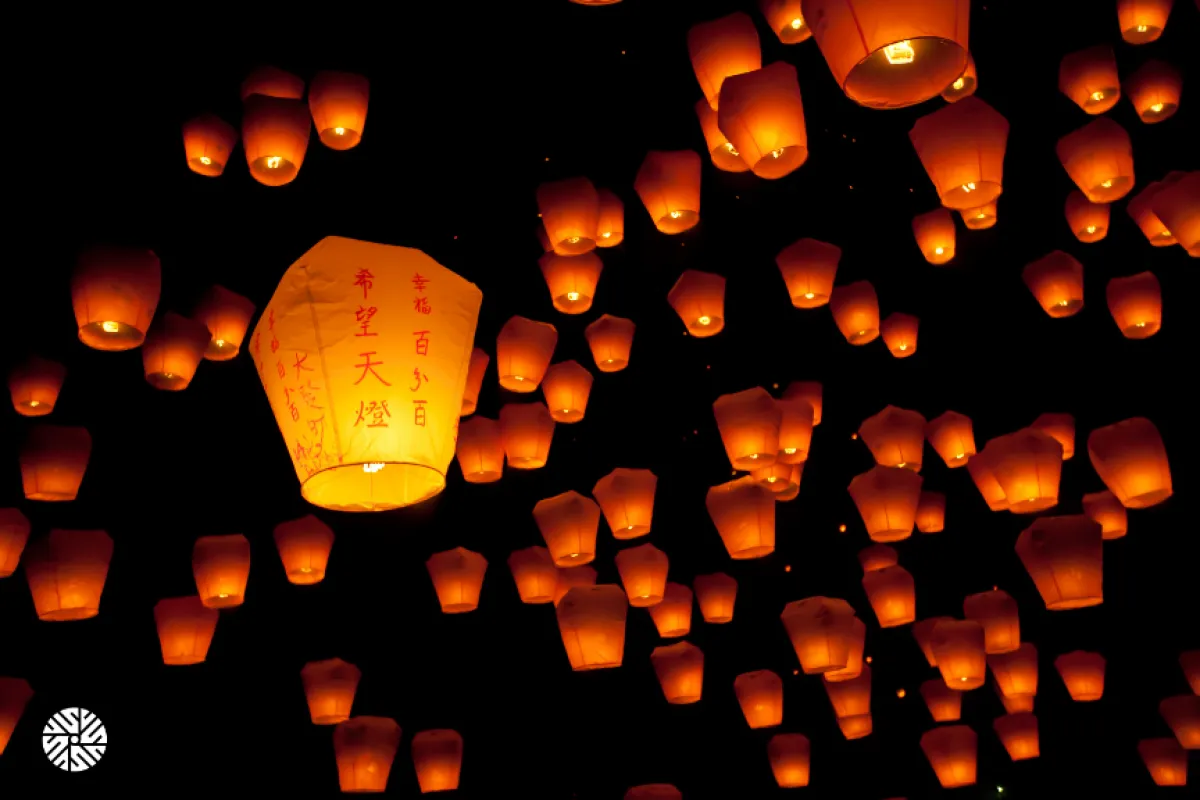
The Lantern Festival (元宵節) marks the 15th and final day of Lunar New Year celebrations. In 2026 it falls on 3 March. Two events headline the day: the Taipei Lantern Festival in the city centre, and — far more famously — the Pingxi Sky Lantern Festival in the mountainous township just outside Taipei.
Pingxi is the one most international travellers come for. Thousands of paper lanterns inscribed with wishes are released into the night sky simultaneously, creating the iconic image you've seen in travel reels and films. The event is recognised as one of the world's most beautiful festivals and is regularly cited in UNESCO's intangible heritage discussions. The signature mass releases happen at scheduled times — typically three or four releases through the evening — and require advance ticketing.
Tickets for the official mass-release events open online roughly 6-8 weeks before the festival and sell out within hours. If you miss the official ticket window, smaller paid lantern releases happen on Pingxi's old street through the entire week leading up to the main event, and those don't require booking — just show up and pay 200-300 NTD per lantern.
The major travel logistics: Pingxi is reached via the historic Pingxi Branch Line train from Ruifang. On festival night the train runs at capacity and shuttle buses are added. Accommodation in Pingxi itself is extremely limited; most attendees base in Taipei (45-60 minutes by train) or nearby Jiufen.
Crucially for screening: the Lantern Festival is a single evening. Hospitals operate normally on 3 March itself and on the days surrounding it. This makes early March one of the best windows of the entire year — you can do a full Taipei screening Monday-Thursday and finish your trip with the festival on Wednesday or whichever weekday it falls.
Tomb Sweeping + Dragon Boat
Two mid-year public holidays bracket spring and summer: Tomb Sweeping Day (清明節) in early April and the Dragon Boat Festival (端午節) in June.
Tomb Sweeping (3–6 April 2026, combined with Children's Day) is when Taiwanese families visit ancestral graves to clean tombs and make offerings. It's the closest equivalent to a Western family memorial day. Public services close on the holiday itself, but unlike CNY, the disruption is single-day. Hospitals and clinics resume normal operations the next working day. Highway traffic on the holiday weekend is heavy — particularly Friday afternoon outbound from Taipei and Sunday evening returning — so don't schedule airport transfers across those exact windows.
Dragon Boat Festival (19 June 2026) commemorates the poet-statesman Qu Yuan with the famous dragon boat races and the eating of zongzi (sticky rice dumplings wrapped in bamboo leaves). The most spectacular races happen in Lukang (Changhua), Tainan, Yilan, and Taipei's Dajia riverside park. Each city's race is a half-day affair, free to spectate, and worth detouring for if you're in the area.
For screening planning: book your screening for the days adjacent to either holiday and use the holiday itself as a sightseeing day. Lukang Dragon Boat races happen to align beautifully with central Taiwan screening trips that include a Mazu temple stop.
Mid-Autumn (with Taiwan's unique BBQ tradition)
Mid-Autumn Festival (中秋節) on 25 September 2026 is the lunar harvest festival celebrated across most of East Asia. Mooncakes, family gatherings, full-moon viewing — these are the universal traditions. What makes Taiwan's version unique is the BBQ phenomenon.
Through the late 1980s a soy sauce brand ran a hugely successful TV ad campaign with the tagline "one family BBQs, ten thousand families smell it" (一家烤肉萬家香). Within a few years, Mid-Autumn Festival in Taiwan had become a national outdoor BBQ night — riversides, parks, apartment courtyards, and rooftop terraces fill with families grilling. No other Asian country celebrates Mid-Autumn this way. It's a quirky, deeply Taiwanese addition to a centuries-old tradition.
Mid-Autumn is a single public holiday day. Hospital impact is minimal — outpatient clinics close for the 25–28 September holiday and resume on 29 September. Mooncake gifts circulate aggressively in the two weeks leading up; expect to be offered them at every clinic visit, hotel check-in, and meeting in the fortnight before it. They are remarkably calorie-dense, so if you're pre-screening for cholesterol or glucose, factor that in.
Double Tenth — National Day fireworks
Double Tenth (10/10) is Taiwan's National Day, commemorating the 1911 Wuchang Uprising that led to the founding of the Republic of China. October 10 is a full public holiday; in 2026 it falls on a Saturday, with a make-up holiday on Friday 9 October. The signature event is the National Day fireworks, which rotate host cities each year — Taipei, Kaohsiung, Tainan, Taichung, and others have all hosted recent editions. Confirm the 2026 host city via the official tourism bureau before locking flights.
Even when the official fireworks aren't in Taipei, Taipei 101 typically runs its own celebration display on the evening of Oct 10. The building's facade lights with patriotic colour sequences from sunset, and crowds gather along Xinyi District boulevards from 6pm. It's free, photogenic, and family-friendly.
Screening impact: single public holiday day, normal hospital operations the day before and after. Hotels in the host city run premium pricing for the Friday-Sunday around Oct 10, so book early or stay one MRT zone outside the main festival area.
Mazu Pilgrimage — Asia's largest religious procession
The Dajia Mazu Pilgrimage (大甲媽祖遶境) is one of the world's largest religious processions. For nine days each spring — in 2026 the palanquin leaves Dajia Jenn Lann Temple late on 17 April and returns on 26 April — the goddess Mazu's statue is carried from Dajia in Taichung through Changhua, Yunlin, Chiayi, and back. Pilgrims walk some or all of the route, with many more lining the streets to receive blessings as the palanquin passes.
UNESCO has recognised the pilgrimage as one of the world's three major religious events, alongside the Vatican Christmas Mass and the Hajj. For travellers willing to detour from a standard Taipei-only trip, witnessing the procession enter a town at midnight — firecrackers, drums, devotees crawling under the palanquin to receive blessing — is one of the most extraordinary cultural experiences in Asia.
Screening impact: the pilgrimage causes significant road delays through central Taiwan for nine days. Highway closures rotate ahead of the palanquin. If you're planning a Taichung-based screening at facilities like Asia University Hospital or China Medical University Hospital during the pilgrimage window, build buffer time into transfers. Taipei and Kaohsiung are unaffected.
Indigenous festivals — Amis Harvest, Bunun ear-shooting
Taiwan's 16 officially recognised indigenous nations maintain a rich ceremonial calendar that exists alongside (and pre-dates) the Han Chinese festival cycle. Two stand out for cultural travellers.
The Amis Harvest Festival (豐年祭) runs across July and August, with different east coast villages hosting on rotating weekends. The Amis are Taiwan's largest indigenous group, concentrated in Hualien and Taitung counties. The harvest festival features traditional dance, communal feasting, and ceremonies that mark the transition from the agricultural to the post-harvest season. Each village's festival is open to respectful visitors but has its own customs about photography and participation — research the specific village before attending.
The Bunun Ear-Shooting Festival (打耳祭) happens in April in mountain villages across Hualien, Nantou, and Taitung. Historically a coming-of-age hunting ritual where young men proved themselves by shooting deer ears mounted on poles, the modern festival is a cultural celebration with archery, traditional Bunun eight-part harmony singing, and feasting. The Bunun are famed for their pasibutbut polyphonic chanting, recognised internationally as one of the world's most distinctive vocal traditions.
Screening impact: zero. Both festivals happen in remote east coast and mountain regions far from major screening hospitals. They pair well with post-screening east coast extensions through Taroko Gorge.
Modern festivals — Taipei Pride, Hot Spring Festival, Computex
Beyond traditional and religious events, Taiwan hosts a strong calendar of modern secular festivals.
Taipei Pride Parade is held on the last Saturday of October and is Asia's largest pride event, drawing very large crowds in recent editions. The parade route runs through Xinyi District past Taipei 101, ending in a concert and street party. Taiwan was the first jurisdiction in Asia to legalise same-sex marriage (2019), and the parade carries unique regional weight as a result. Hotels in Xinyi book up 6-8 weeks ahead.
Beitou Hot Spring Festival runs through October and November in the historic hot spring district of northern Taipei. Public bath events, spa promotions, and night-time light installations bring extra atmosphere to one of Taiwan's most relaxing neighbourhoods. This is the single best festival to combine with a screening trip — Beitou is 25 minutes by MRT from central Taipei, and many hot spring resorts bundle pre-screening relaxation packages.
Computex Taipei in early June is one of the world's largest tech trade shows. Hotel pricing in central Taipei spikes dramatically for the four-day event window. If you're not in tech, just avoid Computex week. If you are, schedule the screening for the days immediately after the show ends — clinics are quiet because the city is recovering.
Spring Scream in Kenting (early April) is the music festival that put southern Taiwan on the international party calendar. Christmas and NYE in Taipei centre on the Taipei 101 fireworks — one of the most photographed countdown displays in the world. Both are firmly tourist events with no hospital impact.
Festival timing for screening trips — combinations and conflicts
Bringing it all together: which festivals pair with a screening trip, and which derail one?
| Combination | Window | Why it works |
|---|---|---|
| Lantern Festival + Taipei screening | Late Feb - early Mar | Full clinic operations, cherry blossoms, single-evening festival |
| Mazu Pilgrimage + Taichung screening | March-April | Plan around exact procession dates; deeply cultural detour |
| Dragon Boat + Lukang day trip | Mid-June | Single holiday, race day perfect sightseeing |
| Double Tenth + Taipei screening | Early-mid October | Best weather of year, fireworks finale |
| Hot Spring Festival + Beitou screening | Late Oct - November | Hot spring recovery after imaging is restorative and well-priced |
| Taipei Pride + screening | Last week of October | Saturday event, weekday screening fits cleanly |
Combinations to avoid:
- CNY week + screening — Don't try. Hospital outpatient services close, and every booking system runs at minimum staffing.
- Tomb Sweeping holiday + screening on the holiday day — One-day shutdown. Adjust by a day on either side.
- Computex week + Taipei central hotels — Hotel prices double, screening logistics fine but city congestion is intense.
- NYE + airport transfer same evening — Taipei 101 area is closed to traffic. Build in 90 extra minutes for transfers, or simply stay over.
Our concierge team at New Dawn Health tracks the festival calendar against partner hospital schedules and can recommend the exact week to fly in. For travellers who want to anchor the trip on a specific festival — Lantern, Mazu, Hot Spring, Pride — we work backwards from the event date to slot the screening into the cleanest weekday window. Pair this guide with our itinerary planner and spa and hot springs guide to assemble a trip that delivers both medical clarity and cultural memory.
Useful external references: Taiwan Tourism Administration for official festival dates, Taipei City Department of Information and Tourism for Lantern Festival ticketing, and CDC travel health for general inbound health guidance.
Are Clinics Open During Taiwan Holidays?
If you're planning a health check in Taiwan during your trip, timing matters.
Many clinics close during Lunar New Year for several days. Some also reduce hours during other national holidays. See our Taiwan itinerary guide to help plan your schedule.
The best strategy is to schedule your health check a week before or after major holidays. Clinics operate normally during those times.
New Dawn Health can help coordinate appointments and confirm which clinics are open. Many visitors schedule their health check first, then enjoy Taiwan’s festivals afterward.
Hospitals and emergency rooms remain open during holidays, so medical care is always available if needed.
| Festival | Date (2026) | Highlights |
|---|---|---|
| Taiwan Lantern Festival | March 3, 2026 | Giant lantern displays, parades, cultural shows |
| Dragon Boat Festival | June 19, 2026 | Dragon boat races, zongzi food |
| Lunar New Year | February 17, 2026 | Fireworks, family celebrations |
Experience Taiwan Culture & Stay Healthy
Taiwan festivals are colorful, energetic, and deeply rooted in tradition. Planning your trip around one of these events can make your visit even more memorable.
See our Taiwan Instagram spots guide to discover photogenic locations across the island.
If you combine your trip with a health checkup, you can enjoy both culture and wellness in one visit.
For official travel information, visit Taiwan Tourism Bureau, CDC Travel Health, CDC Medical Tourism, WHO, and Taiwan National Health Insurance.
Contact New Dawn Health to plan a Taiwan trip that combines culture, travel, and preventive healthcare.
Sources & Further Reading
- CDC — Travel health information for Taiwan
- Taiwan Bureau of Consular Affairs — visa and entry
- Taiwan Tourism Bureau — official travel resources
- Central Weather Administration of Taiwan
- Taiwan High Speed Rail — official site
- Taipei Metro (MRT) — official
- Kaohsiung City Government Bureau of Labor Affairs — 115年休假日一覽表, the 2026 public-holiday calendar issued by the Directorate-General of Personnel Administration (accessed 2026-09-08)
- Taiwan Tourism Administration — 2026 Taiwan Lantern Festival, Chiayi County, 3–15 March 2026 (accessed 2026-09-08)
- Taichung City Government — 2026 Dajia Mazu pilgrimage departs 17 April, shuttle arrangements (accessed 2026-09-08)
FAQ
2026 Lunar New Year Holiday Timeline
-
Lunar New Year's Eve: Monday, February 16 (Most shops and clinics begin closing by noon).
-
Lunar New Year's Day: Tuesday, February 17.
-
Expected Public Holiday Period: Saturday, February 14 – Sunday, February 22.
Usually yes. The Lantern Festival is a single day (or weekend). Most clinics don't close for it. Only Lunar New Year causes widespread closures.
Absolutely. Taiwanese festivals are family-friendly. Kids love the lanterns, the food, the excitement. Just keep an eye on little ones in crowds.