A bulge in a brain artery that is usually silent and usually never ruptures. Screening is for specific higher-risk groups, after a clinician assesses your history.
Last updated October 2026 · New Dawn Health editorial team
How common
About 3 in 100 adults (Vlak 2011)
Symptoms
Usually none unless it ruptures or is large
Screened with
Brain MR angiogram, for higher-risk groups
Key risks you control
Blood pressure and smoking
What is a brain aneurysm?
A brain aneurysm is a weak, balloon-like bulge in the wall of an artery inside the head. A 2011
meta-analysis estimated that about 3 in 100 adults (Vlak 2011) carry one. Most stay small, cause no
symptoms and never rupture.
The danger is rupture. If the wall gives way, blood leaks around the brain. This is
called a subarachnoid hemorrhage, and it is a life-threatening emergency.
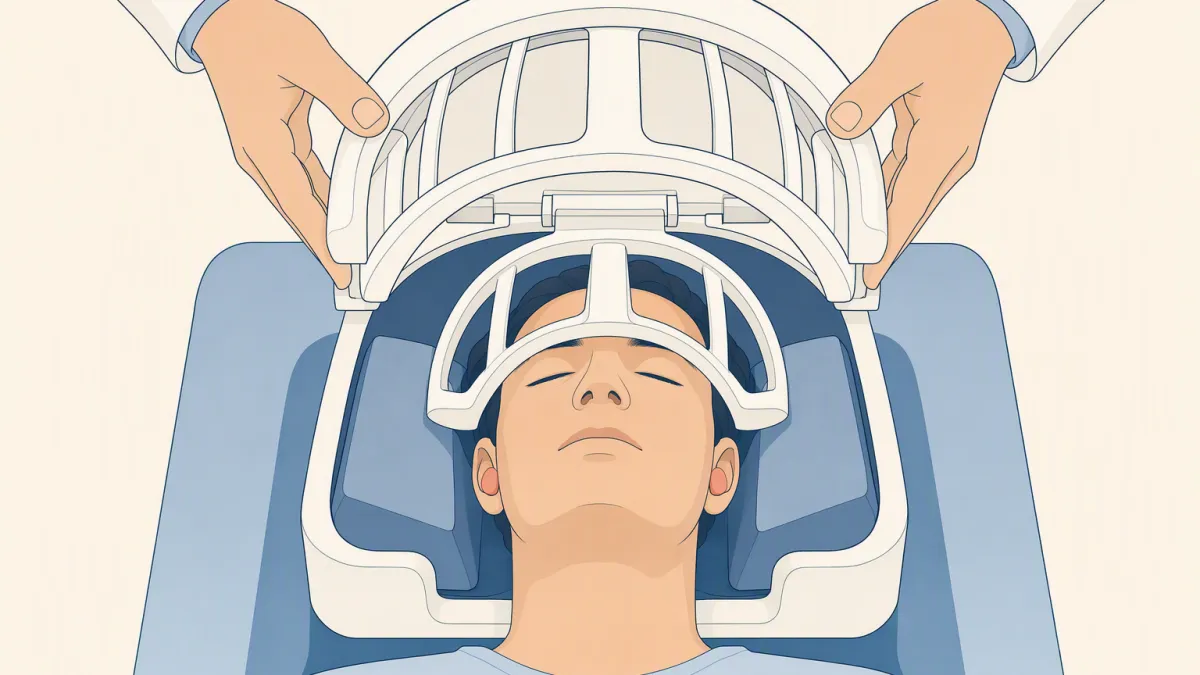
Looking for an aneurysm means a head coil and an MRI — no radiation, no catheter.
Does it cause symptoms?
Most unruptured aneurysms cause no symptoms and are found by chance. A large one can press on a
nearby nerve. That can cause a drooping eyelid, double vision, or pain behind one eye — symptoms to
see a doctor about soon, not a screening question.
Who is at higher risk?
The American Heart Association and American Stroke Association (2015) name the groups where
screening is discussed:
Who is offered aneurysm screening under the AHA/ASA 2015 guideline (US).
Situation
What the guideline says
Two or more family members with an aneurysm or subarachnoid hemorrhage (a bleed on the brain's surface)
Screening should be offered
Polycystic kidney disease
Screening should be offered, particularly to those with a family history of aneurysm
High blood pressure and smoking are linked to aneurysms forming, growing and bleeding. On their own,
they are reasons to treat blood pressure and stop smoking, not reasons to scan.
How it's found
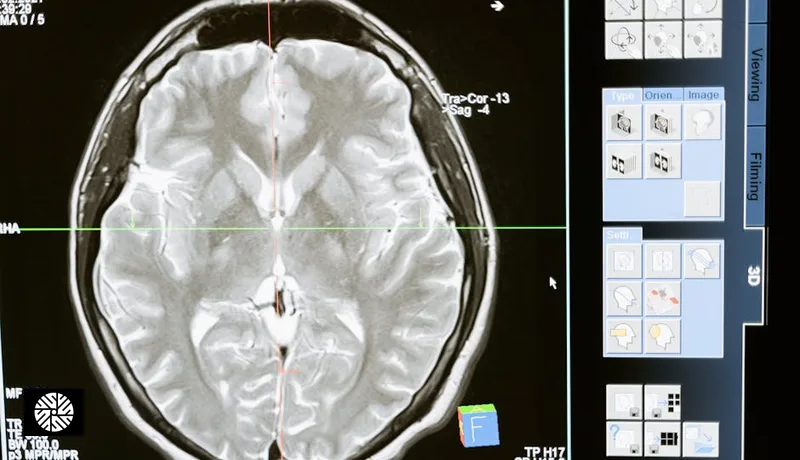
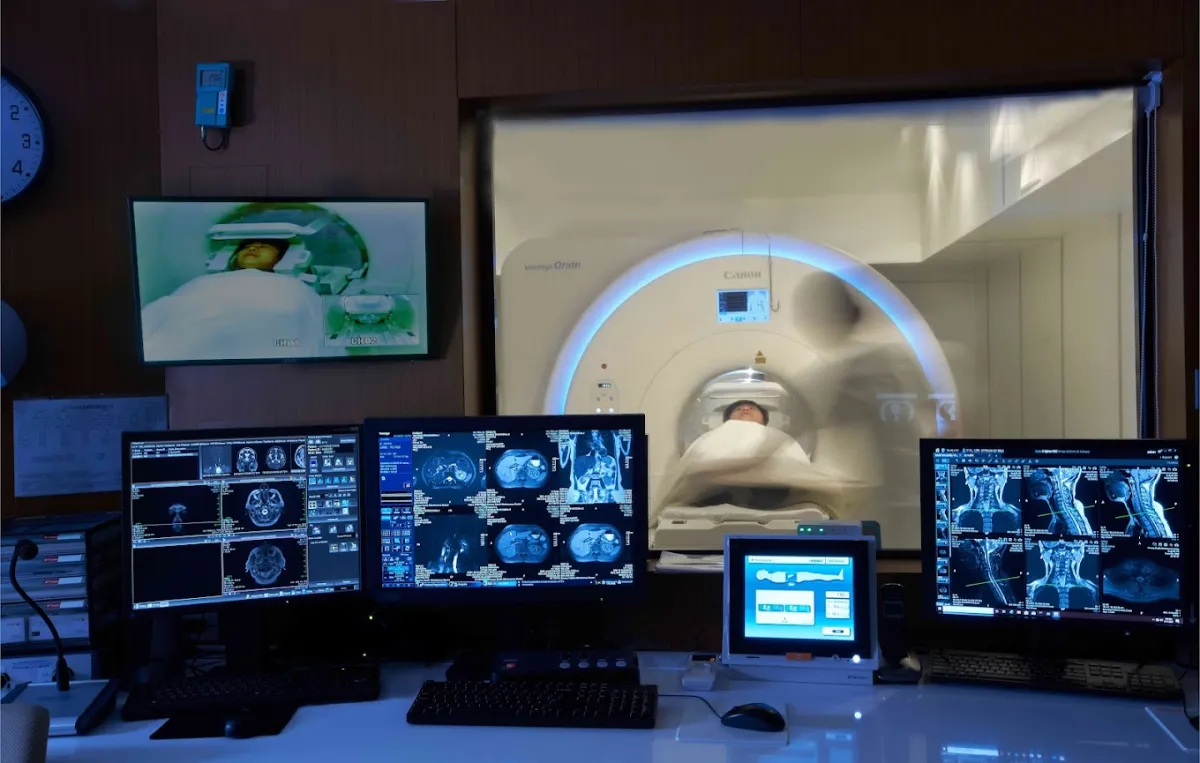
A brain MR angiogram (MRA) uses
MRI to map the arteries inside the skull, with no radiation. Some protocols need no injection; others
use a contrast dye, confirmed when you book. MRI is not safe with some implants, so the team checks
your metal history first.
✓
What a brain MRA can show
Most aneurysms, with their size, shape and location
Narrowed arteries inside the head
!
What it cannot settle
Very small aneurysms can be missed. CT angiography or catheter angiography is used when a clinician needs a closer look.
Whether an aneurysm will rupture. A neurosurgeon or neurointerventionalist weighs that from size, shape and your history.
Brain tissue itself. A standard brain MRI images it, when there is a reason to.
What to do now
A sudden, severe headache or collapse: call 119 in Taiwan, as in the box above.
A new drooping eyelid, double vision or pain behind one eye: see a doctor the same day. If a sudden severe headache comes with it: In Taiwan call 119 (the local equivalent of 911).
Two or more affected relatives, or polycystic kidney disease: ask a physician whether screening is right for you.
None of these: routine screening is not recommended. Wanting reassurance is not, on its own, a reason to scan.
For most people, no. Most aneurysms never rupture, so routine screening is not recommended. US guidance from the AHA/ASA (2015) says screening should be offered to people with two or more family members who had an aneurysm or subarachnoid hemorrhage (a bleed on the brain's surface). It should also be offered to people with polycystic kidney disease, particularly those with a family history.
Will a brain aneurysm always rupture?
+
No. Most never rupture. Rupture risk depends mainly on size, location and shape, along with high blood pressure and smoking. That is why many small aneurysms are monitored rather than treated.
What happens if a scan finds an aneurysm?
+
Usually monitoring, not immediate treatment. A specialist weighs size, location and your risk factors, and small low-risk aneurysms are often re-imaged over time. Some uncertain findings need a different scan to confirm what they are.
Can you prevent a brain aneurysm?
+
You cannot change inherited risk. Controlling high blood pressure and not smoking are the two most useful steps, since both are linked to aneurysms forming and growing. The same habits protect against stroke and heart disease.
Compare screening packages, see exactly what each one includes, or talk to a coordinator
about fitting Brain Aneurysm screening into your visit to Taiwan.