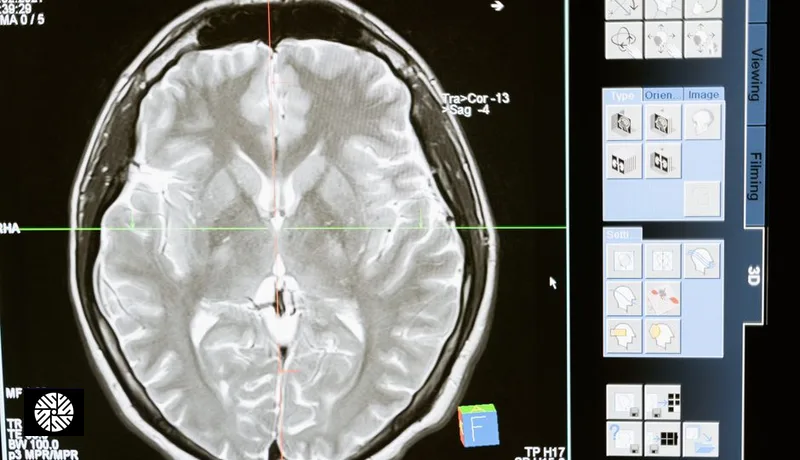

A brain MRI in the United States has no single price. A 2023 study in JAMA Internal Medicine asked 60 US hospitals for their cash price for a brain MRI, once online and once by phone, and found that the two answers often did not even agree with each other. The same scan can be billed very differently depending on the building you walk into.
This guide covers why that spread exists, what drives the price, when insurance pays and when it won't, the difference between a diagnostic brain MRI and a screening one, where an MRA fits, and what the same imaging looks like in Taiwan — where the head arrives bundled inside a whole-body scan rather than priced as its own event.
Why is US brain MRI pricing so hard to pin down?
Because the price is set by the billing structure, not by the scan. US hospitals are required to post cash prices for shoppable services online. The JAMA Internal Medicine study then had secret shoppers phone the same hospitals and ask for their lowest cash price.
| What the study found for brain MRI | Hospitals |
|---|---|
| Gave both an online and a phone price | 47 |
| Online and phone prices within 25% of each other | 31 of 47 |
| Online and phone prices 50% or more apart | 12 of 47 |
| Online and phone prices an exact match | 9 of 47 |
The authors concluded that hospitals have continued problems knowing and communicating their own prices. If the hospital cannot quote one number, the patient cannot compare numbers either.
The practical advice follows from that. Ask several facilities for a cash price for the specific study being ordered: without contrast, with contrast, or both. Ask whether the radiologist's reading fee is included or billed separately.
What actually drives the price?
Strip out the billing and only a few real variables remain:
- Magnet time. MRI takes longer than most imaging exams, and scanner time is the scarce resource.
- Contrast or not. Gadolinium contrast means an IV, the agent itself and a longer protocol. It is used to make things such as tumors, infection and inflammation more conspicuous.
- Who reads it. The radiologist's interpretation can be a separate line from the scan itself. Ask whether the quoted price includes both.
- The facility. A hospital department and a freestanding imaging center can quote very different prices for the same study.
Will US insurance pay for a screening brain MRI?
Usually only when the scan is investigating a symptom. If you have red-flag headaches, a seizure or an unexplained neurological deficit, your physician orders a diagnostic brain MRI and your plan treats it as care.
Screening is different. Under the Affordable Care Act, most plans must cover the preventive services that the US Preventive Services Task Force grades A or B. Screening brain MRI in adults without symptoms is not on that list, so there is no coverage obligation.
This is not an oversight. The American College of Radiology says it does not believe there is sufficient evidence to recommend total body screening for patients with no symptoms, risk factors or family history suggesting disease. Its concern is that screening finds non-specific findings that lead to follow-up testing without improving health.
What is the difference between a screening and a diagnostic brain MRI?
A diagnostic brain MRI is a question with a protocol attached. Your physician suspects a specific thing, the sequences are chosen to answer it, and contrast is used if the question requires it.
A screening brain MRI is a survey. It looks for structural findings such as masses, evidence of old silent strokes, white-matter changes and atrophy. It sees structure, not function. It cannot tell you about cognition, it does not diagnose migraine, and a clean scan is not a certificate of neurological health.
Screening brain MRIs also find incidental things, such as a small cyst or a benign-looking lesion. Most turn out to be nothing, and some need follow-up. Knowing that before the scan is part of consenting properly. Our article on brain MRI in Taiwan covers what the brain portion of a scan looks at.
Where does a brain MRA fit?
A magnetic resonance angiogram (MRA) images the blood vessels rather than the brain tissue. It is done on the same scanner, and it answers a different question: unruptured aneurysms, arterial narrowing and vascular malformations.
Screening for an unruptured aneurysm is its own decision, not an automatic extra. A review in Lancet Neurology names the two groups with the clearest case.
| Risk factor for subarachnoid hemorrhage | Relative risk in the review |
|---|---|
| Two or more first-degree relatives with subarachnoid hemorrhage | 6.6 |
| Polycystic kidney disease | 4.4 |
Outside those groups, it is a conversation with your own physician, not a default. The American Heart Association and American Stroke Association guideline on unruptured intracranial aneurysms covers screening among its topics.
At New Dawn Health, Brain MR Angiography is $699 as an add-on to the Light or Complete package, or to another scan booked at Central Clinic & Hospital. It is not sold on its own, and the Plus package already includes it. Background is in the brain MR angiogram overview and in our guide to brain MRA in Taiwan as a Prenuvo alternative.
What does a brain MRI look like in Taiwan?
It arrives as one region inside a whole-body study. In the US you usually buy body parts: a brain MRI is one scan, and a spine MRI is a second scan with its own bill.
Our Full-Body MRI Light package is $1,399. The MRI covers the head, neck, abdomen, pelvis and whole spine, and excludes the arms and feet. The package also includes a low-dose lung CT and thyroid and abdominal ultrasounds. The listed visit is 2 hours, including scan time and the doctor's debrief. A coordinator confirms preparation and visit specifics when you book.
| What you're buying | US, region by region | New Dawn Health Light, $1,399 |
|---|---|---|
| Brain / head MRI | Priced per scan; cash price varies by facility | Included |
| Neck MRI | Separate scan, separate bill | Included |
| Abdomen MRI | Separate scan, separate bill | Included |
| Pelvis MRI | Separate scan, separate bill | Included |
| Whole spine MRI | Often billed as several regions | Included |
| Low-dose lung CT | Separate scan | Included |
| Thyroid and abdominal ultrasound | Separate appointments | Included |
| Doctor's debrief | Usually a separate visit | Included in the listed 2 hours |
Read the table honestly. If all you want is a brain MRI and you have a good imaging center near you, flying to Taipei for one scan makes little sense. The arithmetic changes only when the head is one of several things you wanted looked at.
MRI does not measure coronary calcium or bone density. For those questions, the Light package takes a Heart Calcium Score CT ($209) and a DEXA scan ($109) as add-ons, and the Comprehensive Blood Work Panel ($249) is an add-on too. The Complete package ($1,699) includes the calcium score and DEXA. The Plus package ($3,099) adds the brain MR angiogram, a coronary CT angiogram and a carotid ultrasound.
For the broader picture, see why Americans have started flying to Taiwan for full-body MRIs and our Taiwan full-body checkup cost guide.
Who does this actually make sense for?
- You have symptoms. Do not fly anywhere. See a physician locally and get the diagnostic scan. Screening abroad is the wrong tool for a symptom.
- You want the head checked and nothing else. Price-shop imaging centers near home. If you are in Taipei anyway, we also list a Single Region MRI Scan without contrast at $310.
- You have the family history or kidney disease named above. Have the MRA conversation with your own physician first. Whether you do it at home or add the $699 MRA to a Light or Complete visit is then a logistics question.
- You want a broad structural baseline. This is where the bundled shape wins: five MRI regions, a lung CT, two ultrasounds and a debrief in one listed two-hour visit for $1,399.
The bottom line
A US brain MRI price depends mostly on the facility, and hospitals do not always quote the same price twice. Insurance pays when a physician is chasing a symptom. It has no obligation to pay for screening a healthy brain.
If you want the scan, decide what shape of purchase suits you. At home, compare cash prices for the specific study and ask whether the reading is included. In Taiwan, the head becomes one of five regions in a $1,399 visit. Compare the options on the health screening page, and bring your family history and any prior imaging.
Sources
- JAMA Internal Medicine, Thomas M et al. 2023 — Comparison of Hospital Online Price and Telephone Price for Shoppable Services (accessed 2026-10-14)
- HealthCare.gov — Preventive care benefits for adults (accessed 2026-10-14)
- US Preventive Services Task Force — A and B Recommendations (accessed 2026-10-14)
- American College of Radiology — ACR Statement on Screening Total Body MRI, 17 April 2023 (accessed 2026-10-14)
- RadiologyInfo.org (ACR and RSNA) — MRI of the Head (accessed 2026-10-14)
- Lancet Neurology, 2005 — Intracranial aneurysm screening: indications and advice for practice (accessed 2026-10-14)
- Stroke, 2015 — Guidelines for the Management of Patients With Unruptured Intracranial Aneurysms: A Guideline From the American Heart Association/American Stroke Association (accessed 2026-10-14)
US / UK terms and the closest Taiwan context
Read this first: These are comparison aids, not claims that coverage, credentials, or care pathways are equivalent. Europe is not one health system; UK examples below refer specifically to NHS England.
Prior authorization / prior approval / precertification
- What it means there
- These US terms describe a health plan decision that may be required before a service or prescription is covered. Approval is not a promise that every cost will be paid.
- Closest Taiwan context
- There is no direct label to apply to a Taiwan self-pay package. For Taiwan care, the relevant questions are whether a physician order is needed, whether an NHI benefit or review rule applies, and what the clinic will charge.
- Do not treat as equivalent
- A US insurer authorization and a Taiwan clinic confirmation solve different problems. Neither should be represented as the other.
- What to ask
- Before travel, obtain a written answer from the insurer about overseas coverage, authorization, documents, deadlines, exclusions, and reimbursement currency.
In-network / out-of-network
- What it means there
- US network status is based on a provider contract with a particular insurance plan.
- Closest Taiwan context
- Taiwan has NHI-contracted providers (健保特約醫事機構), but that status is not the same as being in a US insurer network. A service at an NHI-contracted facility can still be self-pay or outside an overseas policy.
- Do not treat as equivalent
- “NHI-contracted,” “covered by NHI,” “in-network,” and “eligible for overseas reimbursement” are four separate questions.
- What to ask
- Verify the facility, physician, service, and claim route with the insurer; separately ask the Taiwan facility which items are NHI-funded and which are self-pay.
Radiology report, DICOM, and PACS
- What it means there
- A radiology report is the clinician’s interpretation. DICOM (Digital Imaging and Communications in Medicine) is the international standard for medical images and related information. PACS is a system used to store and retrieve imaging data.
- Closest Taiwan context
- Taiwan facilities may use the same international imaging standards, but the available export medium, viewer, report language, and delivery time are facility-specific.
- Do not treat as equivalent
- Receiving a PDF report does not necessarily mean the diagnostic images are included. Receiving DICOM files does not replace a signed clinical report or guarantee that another facility can import every file.
- What to ask
- Ask separately for the signed report, report language, complete DICOM study, delivery method, viewer needs, release timing, and any fee.