What is cancer?
Cancer is a group of diseases in which abnormal cells divide out of control, invade nearby tissue, and can spread to distant parts of the body. It is more than 100 diseases, each named for the organ or tissue where it starts, or for the type of cell involved.
Why early detection matters
Many cancers are easier to treat when they are found small and before they spread. But screening helps only when its benefits outweigh its harms in a defined group: fewer deaths, less illness, or, for cervical and colorectal screening, cancers prevented. Outside those groups, the harms can outweigh the benefit.
What raises your risk
Risk comes from factors you cannot change and several you can:
- Age — the biggest factor. In US data the median age at diagnosis is 67.
- Family history and inherited genes — these raise the risk of specific cancers
- Tobacco — the largest factor you can change, driving lung and several other cancers
- Alcohol and excess weight — both linked to several cancers
- Chronic infections — HPV, hepatitis B and C, and H. pylori in the stomach
Having a risk factor does not mean you will get cancer. Many people who develop it have none of the obvious ones, which is why age-based screening still matters when you feel well.
Which screening tests work
- Breast: mammography — USPSTF (US) and Taiwan's HPA, women 40–74 every 2 years
- Colorectal: a stool test (FIT) or colonoscopy — USPSTF 45–75; Taiwan screens with FIT
- Lung: low-dose CT lowers lung-cancer deaths in heavy smokers (NLST). Taiwan also screens people with a family history, where the evidence is detection (TALENT), not fewer deaths.
- Cervical: Pap and HPV tests — USPSTF and HPA
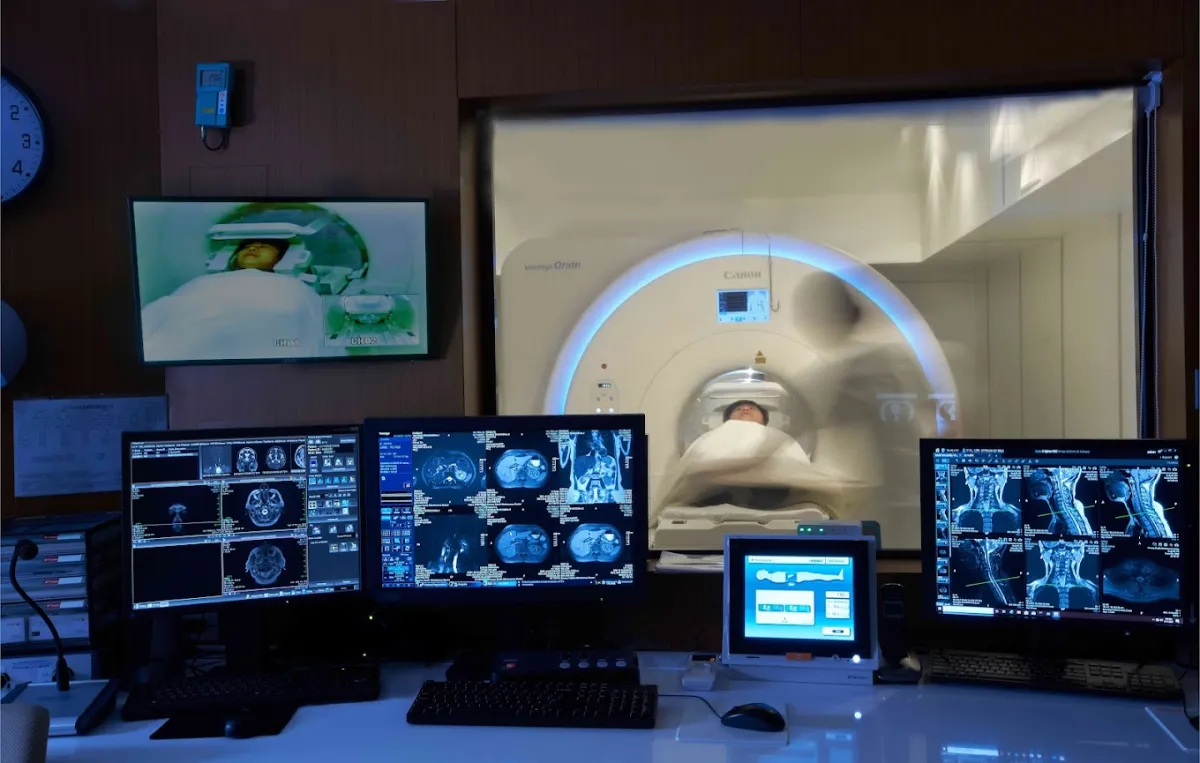
- Whole-body MRI. The American College of Radiology (2023) says there is no documented evidence it prolongs life. The tests on the left remain the screens for those cancers.
- Tumor markers such as CEA and CA 19-9. The US National Cancer Institute says they do not work well for screening. Imaging or a biopsy answers a specific question instead.
- PSA for prostate cancer. The USPSTF (US) calls it an individual decision at 55–69 and recommends against it from 70. The blood panel page explains why.
Who is screened in Taiwan
Taiwan's Health Promotion Administration (HPA) runs national programs for these groups. Funded screening is for people with National Health Insurance who meet the criteria:
| Cancer | Test | Who, and how often |
|---|---|---|
| Colorectal | Stool test (FIT) | Ages 45–74 every 2 years; ages 40–44 every 2 years if a parent, child or sibling has had colorectal cancer |
| Breast | Mammography | Women 40–74 every 2 years |
| Cervical | Pap smear; HPV test | Pap ages 25–29 every 3 years; from 30, subsidized yearly (HPA recommends at least every 3 years). HPV test once at each of 35, 45 and 65 |
| Lung | Low-dose CT | Every 2 years with a parent, sibling or child with lung cancer (men 45–74, women 40–74). Also smokers 50–74 with 20+ pack-years (one pack a day for 20 years, or the equivalent) who currently smoke and are willing to quit, or who quit less than 15 years ago |
| Oral | Visual mouth exam | Every 2 years for people 30 and over who smoke or chew/chewed betel nut; Indigenous people 18–29 who chew/chewed betel nut |
| Stomach | H. pylori stool test | Once, at 45–74. It tests for the infection, not for cancer. |
Short-term visitors are not covered by Taiwan's National Health Insurance, so screening is self-funded. The table is still a fair guide to who Taiwan screens.
- Heavy or uncontrolled bleeding, coughing or vomiting blood, or bleeding with fainting, weakness or trouble breathing: In Taiwan call 119 (the local equivalent of 911).
- A lump, unexplained weight loss, bleeding or a persistent change: see a doctor soon. Symptoms need diagnosis, not a screening package.
- No symptoms: match yourself to the table, and ask about earlier screening if a close relative had cancer young.
- An abnormal result: it needs diagnostic follow-up. How that is arranged is confirmed for your booking.