What is a prostate exam?
A prostate exam checks the prostate, a gland that sits below the bladder and surrounds the urethra. Its core is the PSA blood test. A doctor may add a digital rectal exam or a prostate ultrasound.
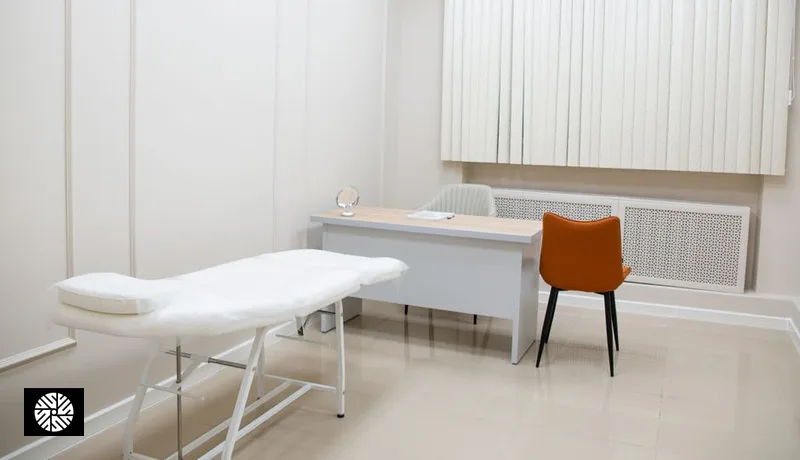
At New Dawn Health it is the Prostate Exam, a 30-minute appointment at iHope Clinic in Taipei's Xinyi District. Our listing describes a prostate assessment in which the PSA result is read in context rather than alone. It does not yet itemize the other parts. Your coordinator confirms, when you book, whether a rectal exam, an ultrasound and a doctor's review of the result are included.
| Part | How it is done | What it shows |
|---|---|---|
| PSA blood test | A small blood sample from a vein in the arm | The level of prostate-specific antigen, a protein made by normal and cancerous prostate cells |
| Digital rectal exam (DRE) | A doctor feels the prostate with a gloved, lubricated finger | Size, lumps and hard areas at the back of the gland |
| Prostate ultrasound | Sound waves, through the lower belly or from a small probe in the rectum | The size of the prostate; it can also guide a biopsy needle |
In Taiwan, prostate cancer is the third most common cancer in men. Taiwan's Health Promotion Administration reports 9,062 new cases in 2022. It reports 1,897 deaths from prostate cancer in 2024.
Who should consider PSA screening, and who should skip it?
Every guideline body below says the same first thing: talk it through with a doctor, then decide. They differ on when to start and when to stop.
| Body | Average risk | Higher risk | Older men |
|---|---|---|---|
| USPSTF (US, 2018; update in progress) | Ages 55–69: an individual decision after discussing benefits and harms with a clinician (grade C) | No separate recommendation; Black men may benefit more, and so may men whose father, brother or son had advanced or fatal prostate cancer | Recommends against PSA screening from 70 (grade D) |
| AUA/SUO (US urologists, 2023; amended 2026) | A baseline PSA may be offered at 45–50; regular screening every 2–4 years is offered at 50–69 | Screening offered from 40–45 for men of Black ancestry, with an inherited gene change such as BRCA2, or with a strong family history | The interval can be personalized, or screening stopped, based on preference, age, PSA level, risk, life expectancy and health |
| American Cancer Society (2023) | An informed decision with a doctor from 50; a PSA below 2.5 ng/mL may need retesting only every 2 years, and 2.5 or higher yearly | From 45 for African American men and men whose father or brother was diagnosed before 65; from 40 if more than one such relative | Not offered to men without symptoms whose life expectancy is under 10 years |
| Taiwan Health Promotion Administration (2025) | No government PSA screening program; says the evidence is insufficient that PSA testing lowers prostate cancer deaths | No separate advice; see a doctor early for urination problems, frequent night-time urination or unexplained bone pain | Cites the USPSTF: not recommended from 70 |
An update to the USPSTF's 2018 statement is in progress. The USPSTF has not replaced it yet, so the 2018 grades still stand.
Who should skip it
- Men 70 and over, under the USPSTF recommendation.
- Men with less than about 10 years of life expectancy, under the American Cancer Society guideline.
- Men who do not want screening. The USPSTF says clinicians should not screen men who do not express a preference for it.
- Men with symptoms. Trouble urinating, blood in urine or semen, or bone pain call for a doctor's assessment, not a screening package.
What raises PSA besides cancer?
There is no single normal PSA level. A high PSA can come without cancer, and a low PSA can come with it. These are the usual causes of a rise other than cancer:
| Cause | Effect on PSA | What to do |
|---|---|---|
| Enlarged prostate (BPH) | Can raise it | Ask whether the doctor will weigh PSA against prostate size (PSA density) |
| Prostate infection or inflammation (prostatitis) | Can keep it raised for a month or two | Treat it first and test after it has settled |
| Urinary tract infection | Can raise it | A urine test checks for infection |
| Recent prostate biopsy | Can keep it raised for a month or two | Tell the clinic the date of the biopsy |
| Recent cystoscopy | Can raise it for a short time | Tell the clinic about any recent procedure, including a urinary catheter |
| Ejaculation | Raises it for a short time | Avoid it for 2 days before the test |
| Vigorous exercise such as cycling | Raises it for a short time | Avoid it for 2 days before the test |
| Testosterone, or medicines that raise testosterone | May raise it | List them when you book |
| Age | PSA rises slowly with age, even in a normal prostate | Some doctors use a higher cutoff for older men and a lower one for younger men |
What lowers PSA and can hide a rise
- Finasteride (sold as Proscar or Propecia) and dutasteride (Avodart) lower PSA. Doctors use a lower cutoff for men taking them.
- Some dietary-supplement mixtures may mask a high PSA, according to the American Cancer Society.
- Long-term aspirin, statins or thiazide diuretics may lower PSA; the American Cancer Society says more research is needed.
Is it an enlarged prostate or prostate cancer?
Urinary symptoms have several causes besides cancer. Early prostate cancer usually causes no symptoms at all.
| Condition | Typical symptoms | Link with PSA and cancer |
|---|---|---|
| Enlarged prostate (BPH) | Trouble starting or emptying, a weak or interrupted stream, dribbling, urgency, frequency, getting up at night to urinate | Not cancer, and it does not raise the risk of prostate cancer. It can raise PSA. It affects 5–6% of men aged 40–64 and 29–33% of men 65 and over. |
| Prostatitis | In the acute bacterial form: fever, chills, body aches and burning when urinating | Not cancer. It can keep PSA raised for a month or two. |
| Early prostate cancer | Usually none | Found through PSA or a rectal exam; only a biopsy confirms it |
| More advanced prostate cancer | Blood in urine or semen; Taiwan's HPA also lists unexplained bone pain as a reason to see a doctor | Needs a doctor's assessment, not screening |
Symptoms may not be directly related to the size of the prostate, according to the US National Institute of Diabetes and Digestive and Kidney Diseases (NIDDK).
What do a rectal exam, an ultrasound and an MRI add?
PSA is the first test. The others answer narrower questions, and none of them can diagnose cancer. Only a biopsy, read by a pathologist, does that.
| Test | What it adds | Its limits |
|---|---|---|
| Digital rectal exam (DRE) | Feels the back of the gland, where cancers often begin. It sometimes finds a cancer when PSA is normal. US urologists advise considering it when PSA is 2 ng/mL or higher. | Less effective than PSA. The USPSTF does not recommend it as a screening test, and US urologists say not to use it alone. |
| Pelvic ultrasound through the belly | Shows the bladder, prostate and seminal vesicles, without anything inserted | A detailed view of the prostate usually needs the transrectal probe; ultrasound alone cannot diagnose prostate cancer |
| Transrectal ultrasound (TRUS) | Measures prostate volume, which gives PSA density; guides the needles during a biopsy | Can miss some cancers; ultrasound alone cannot diagnose prostate cancer |
| Prostate MRI (multiparametric) | Scores suspicious areas from 1 (most likely not cancer) to 5 (very suspicious) on the PI-RADS scale; points the biopsy needle at them | Cannot always tell cancer from inflammation or bleeding; a normal MRI does not rule out cancer in a man whose risk is high |
How much the DRE adds in screening
The PROBASE trial tested the rectal exam in 50-year-old men. Of 57 men with a suspicious exam, 37 had a biopsy, and 2 had prostate cancer. Both cancers were the lowest grade (Grade Group 1).
Why an MRI may come before a biopsy
US urology guidance allows a prostate MRI before a first biopsy. In the PRECISION trial, 500 men with a suspected cancer and no earlier biopsy were assigned to MRI first or to a standard biopsy:
- 28% of the MRI group had a scan that did not suggest cancer, and skipped the biopsy.
- Clinically significant cancer was found in 38% of the MRI group, against 26% with standard biopsy.
- Clinically insignificant cancer was diagnosed 13 percentage points less often in the MRI group.
A prostate MRI is a dedicated scan of one region. The pelvic part of a full-body MRI is a survey, not this protocol; the pelvis page explains the difference. A single-region MRI can cover the pelvis. Ask your coordinator whether the clinic runs the multiparametric prostate protocol and reports it with PI-RADS before you book it for this purpose.
How do I prepare for a PSA test?
-
1Weeks before: check for anything that raises PSAAn infection or inflammation of the prostate, or a prostate biopsy, can keep PSA raised for a month or two. If you had one recently, ask your coordinator whether to test later.
-
2When you book: list your medicinesName finasteride, dutasteride, testosterone and any supplements. Bring earlier PSA results with their dates, so the new value can be compared.
-
3Two days before: no ejaculation, no hard cyclingThe US National Cancer Institute advises avoiding activities that raise PSA for 2 days before the test. That means no ejaculation and no vigorous exercise such as cycling.
-
4On the day: keep taking your medicinesDo not stop a medicine unless a doctor tells you to. Your coordinator confirms whether to fast and what else to bring.
What happens during the appointment?
The parts below apply when they are included in your appointment. Our listing gives the whole visit 30 minutes.
- Blood draw: a small needle takes blood from a vein in your arm. You may feel a little sting, and it usually takes under five minutes.
- Rectal exam: you lie on your side or lean over the exam table. You may feel mild discomfort, and it takes a short time. It is usually not painful.
- Transrectal ultrasound: a probe about the size of a finger goes a short way into the rectum.
- Pelvic ultrasound through the belly: the probe moves over the lower belly. You may be asked to drink water first to fill your bladder.
None of these uses radiation. The blood draw may leave slight pain or a bruise that fades quickly.
What happens after a high PSA?
No PSA level proves cancer. Many doctors use 4 ng/mL as the point for further testing, and some use 2.5 or 3. The American Cancer Society gives these odds:
| PSA level | Chance of prostate cancer |
|---|---|
| 4 to 10 ng/mL | About 1 in 4 |
| Above 10 ng/mL | Over 50% |
-
1Repeat the testUS urologists advise repeating a newly raised PSA before any further test, because the level can return to normal. The National Cancer Institute says a doctor may repeat it 6 to 8 weeks later. Follow the same 2-day rules.
-
2Rule out a harmless causeA urine test checks for infection. A doctor reviews medicines and recent procedures, and may do a rectal exam.
-
3Refine the riskA doctor may add free PSA, PSA density, another blood or urine marker, or a risk calculator. These help decide whether a biopsy is worth it.
-
4Prostate MRIAn MRI before a biopsy can spare some men the biopsy and aim the needle for others.
-
5Biopsy, only if still neededAbout 12 tissue samples are taken through the rectum or through the skin between the scrotum and anus, usually under local anesthetic. The biopsy takes about 10 minutes. Results usually take 1 to 3 days.
If the result comes back while you are in Taiwan
- One raised result is a reason to repeat the test, not to rush. If your trip is shorter than 6 to 8 weeks, the repeat test happens at home.
- Hand the follow-up to a doctor at home. That doctor will order the repeat test, any MRI or biopsy, and any treatment.
- If you choose more tests in Taiwan, have the MRI before any biopsy. After a biopsy, a doctor may wait six to eight weeks before an MRI, because bleeding in the prostate can look like cancer.
- Plan a biopsy where you can be seen afterwards. Soreness and blood in the urine can last a few days, and blood in the semen several weeks. Infection is a known risk.
What to bring to your doctor at home
- The PSA value, its units (ng/mL), the test date and the laboratory's reference range
- Any earlier PSA results, with dates
- A list of medicines that change PSA, such as finasteride, dutasteride or testosterone
- The written findings of any rectal exam or ultrasound, and the images if you were given them
Report language, turnaround and whether images are released vary by clinic. Your coordinator confirms them when you book.
What are the risks of PSA screening?
The blood draw itself carries very little risk. The risks come from what a raised result sets off: more tests, a biopsy, and sometimes treatment for a cancer that would never have caused harm.
| Outcome | Men out of 1,000 |
|---|---|
| Avoid death from prostate cancer | About 1.3 (later trial data: up to 2) |
| Avoid cancer that has spread | 3 |
| Die of prostate cancer despite screening and treatment | 5 |
| Have a positive PSA result | 240 |
| Are hospitalized after a biopsy | 2 |
| Are diagnosed with prostate cancer | 100 |
| Are treated with surgery or radiation | 80 |
| Have sexual dysfunction from treatment | 50 |
| Have urinary incontinence from treatment | 15 |
False alarms and biopsy harms
- About 6–7% of men have a false-positive PSA in any one round of screening.
- Only about 25% of men who have a biopsy for a raised PSA turn out to have prostate cancer.
- About 1% of prostate biopsies lead to complications that need hospital care.
- Biopsy harms include pain, bleeding, blood in the semen and infection.
Overdiagnosis
Overdiagnosis means finding a cancer that would never have caused symptoms in the man's lifetime. The USPSTF estimates that 20% to 50% of men diagnosed through PSA screening may be overdiagnosed. It expects the rate to rise with age.
Treating such a cancer brings harm with no benefit. After removal of the prostate, about 1 in 5 men have long-term urinary incontinence, and 2 in 3 have long-term erectile dysfunction. More than half of men treated with radiation have long-term erectile dysfunction.
Three practices now reduce the harm of overdiagnosis:
- Active surveillance: for low-risk cancer, US urologists prefer close monitoring to immediate treatment.
- MRI before biopsy: in the Swedish GÖTEBORG-2 trial, an MRI-targeted biopsy instead of a standard one cut diagnoses of clinically insignificant cancer by more than half.
- Longer gaps for low PSA: US urologists allow a longer re-screening interval for men aged 45 to 70 whose PSA is below 1 ng/mL, which means fewer tests.
Longer follow-up has improved the balance. The European ERSPC trial followed 162,236 men aged 55 to 69 for a median of 23 years. Prostate cancer deaths were 13% lower in the screening group. One death was prevented for every 456 men invited to screening.
How much does the Prostate Exam cost, and what does the price include?
The live price further down this page is the booking price of the Prostate Exam at iHope Clinic through New Dawn Health.
- What it includes: a 30-minute prostate assessment with the PSA read in context. Whether it also covers a rectal exam, an ultrasound or a specialist's review is confirmed when you book.
- What it does not include: a repeat PSA, a prostate MRI or a biopsy. Those are separate decisions and separate tests.
- PSA inside a package: if you are booking a full screening package, check the tumor markers page first. Several packages already include PSA for men.
- Insurance: ask your insurer at home whether it reimburses a test done abroad before you book.