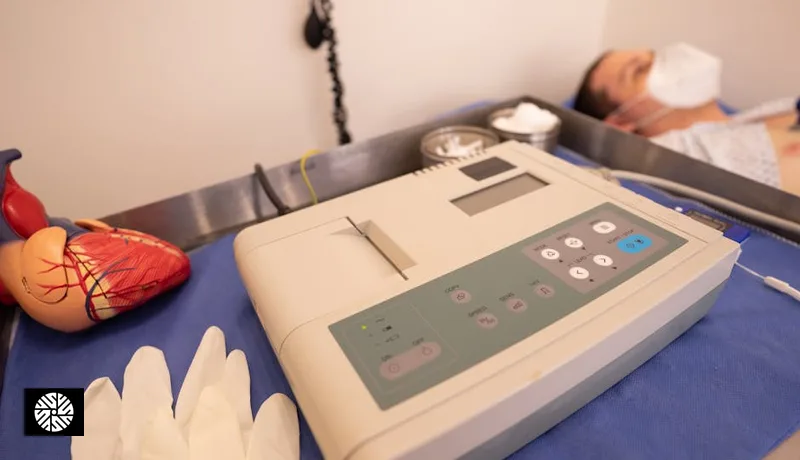
What is a physical exam and biometrics?
A physical exam and biometrics is the baseline building block of any check-up: a set of measured vital signs and body metrics taken alongside a hands-on physician examination. The numbers are simple — height, weight, BMI, waist circumference, blood pressure, and resting heart rate — and they need no preparation and cost only a few minutes. Basic as they look, these readings are the frame every scan and lab result is later read against.
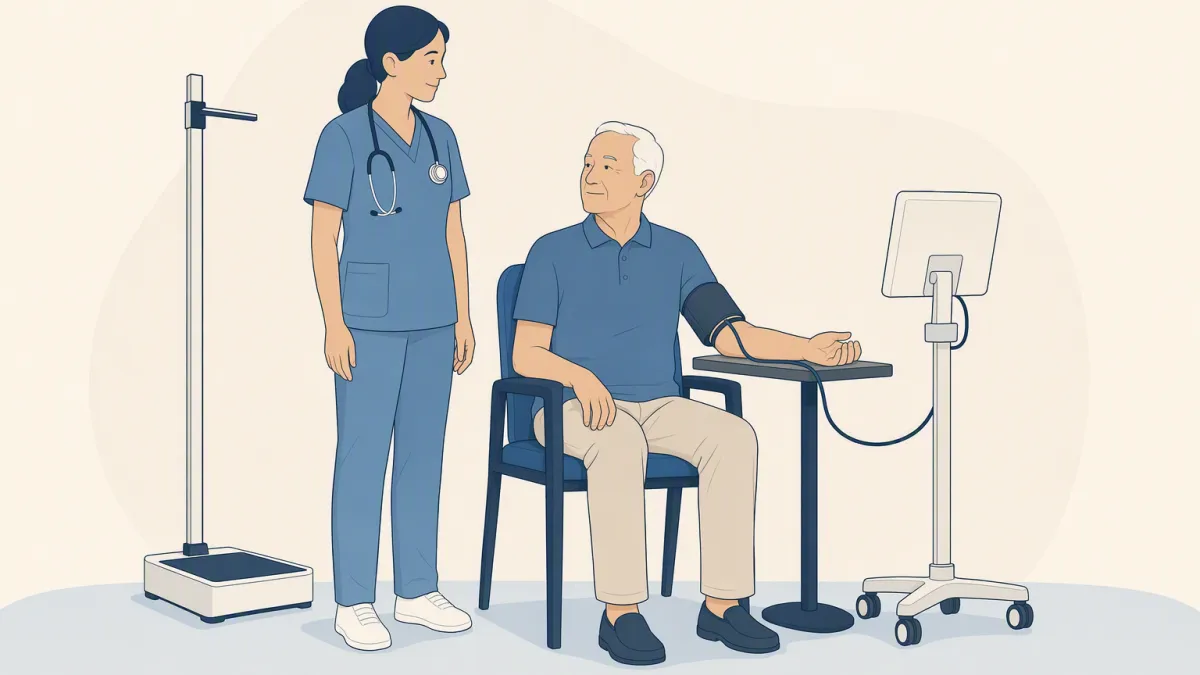
How the measurements are taken
The blood pressure cuff has a simple mechanism. It wraps your upper arm and inflates until it squeezes the artery underneath completely shut. At that moment nothing is getting past — that is the point. Then the air is let out slowly, and the cuff listens for two events on the way down.
The first event: at some pressure, the push of your heart at the peak of a beat becomes just strong enough to force a spurt of blood past the cuff. The pressure at which blood first breaks through is the top number, the systolic. The second event: as the cuff keeps falling, more and more gets through, until the artery is no longer being pinched at all and the spurting settles into smooth, continuous flow. The pressure at which that happens is the bottom number, the diastolic. So the two figures are not abstract. They are the pressure inside your arteries at the hardest moment of a heartbeat, and the pressure still there between beats, when the heart is resting.
| Number | The moment the cuff catches | What it measures |
|---|---|---|
| Systolic (top) | Blood first spurts past the cuff | Artery pressure at the peak of a heartbeat |
| Diastolic (bottom) | Spurting settles into smooth flow | Artery pressure between beats |
Catching those two moments is all the instrument does. A stethoscope hears the turbulent spurts start and then stop. An automatic cuff works differently: it senses pressure vibrations in its own bladder and estimates the readings from them.
Why sitting, rested, and quiet
Blood pressure is not a fixed property of a person, like height. It moves minute to minute: standing up, talking, a full bladder, a coffee, a cigarette or a rush through traffic all move it. A number only means something when it is measured the way the guideline evidence was. In the studies the US Preventive Services Task Force reviewed, that was:
- Seated, after 5 minutes of rest
- A validated device, with the cuff on the upper arm
Which leads to the part people most often get wrong. One high reading is not a diagnosis. A single sample of a swinging value tells you where it was at that instant, and being measured in a clinic pushes it up in many people. That is why the USPSTF recommends confirming a high office reading with measurements outside the clinic, such as home monitoring, before treatment starts. One normal reading does not clear you either.
The body metrics, and their honest ceiling
The rest is measurement in the plainest sense. Height and weight are read off a stadiometer and a scale; BMI is then just weight divided by height squared. That is the whole calculation. BMI is a ratio of two numbers, and no ratio of two numbers can tell what the weight is made of. Waist circumference adds the thing BMI cannot see: not how much, but where. The NHLBI method is to stand, place the tape around your middle just above the hipbones, and read it just after you breathe out.
What the measurements catch
The single most valuable reading is blood pressure. High blood pressure is a major driver of heart disease and stroke, it usually causes no symptoms, and a cuff is how it is found. The other numbers earn their keep over time, as trends across years. A physician's examination adds what no number does.
- Silent high blood pressure — a leading, preventable cause of stroke
- Weight, BMI, and waist trends tracked year over year
- Physical signs found by examination — heart, thyroid, skin, lymph nodes
- Precise body composition — a DEXA scan can measure it when the booked protocol includes it
- Blood sugar and cholesterol — a blood panel
- Silent cancers — organ-specific screens chosen by age and risk, such as a colonoscopy or, for people who qualify, a low-dose lung CT
What a normal exam can't tell you
A normal physical exam does not rule out silent disease. Even the numbers it does give have limits: BMI is only a height-to-weight ratio and cannot separate fat from muscle, so a lean, muscular person and a soft one can read the same.
Where it fits in a screening
The physical exam and biometrics are context, not diagnosis. At New Dawn Health in Taipei they are typically part of a screening package; your coordinator confirms what yours includes when you book. After a high blood-pressure reading:
- It is confirmed outside the clinic — with home monitoring, or a device worn for a day that measures automatically (USPSTF)
- Treatment waits for that confirmation, unless a doctor finds a reason to act sooner
- Take the numbers to your own doctor, so they join your long-term record