What is a coronary CT angiogram?
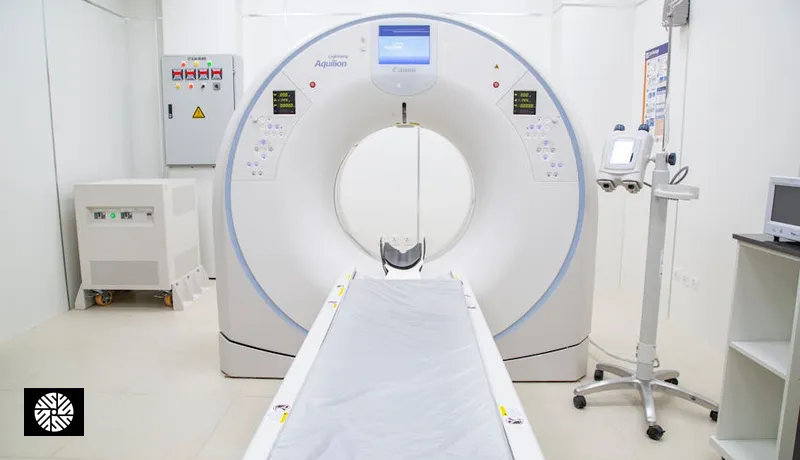
A coronary CT angiogram (CCTA) is a CT scan of the coronary arteries — the vessels that supply your heart muscle. Contrast dye injected through an IV makes the blood inside them bright on the images. A radiologist can then see each open channel, any narrowing, and the plaque in the artery wall.
That includes soft, non-calcified plaque, which a heart calcium score cannot detect. It is a diagnostic test that a clinician orders for a specific question, most often unexplained chest discomfort.
How the scan works
Start with the problem the machine has to solve. Your coronary arteries are about the width of a drinking straw. They sit on a muscle that squeezes roughly once a second, and they are soft tissue surrounded by more soft tissue. A CT scanner takes a fraction of a second per image — long enough for a beating heart to blur.
So the scan watches your heartbeat and waits. ECG pads on your chest tell the scanner where you are in each beat, and it takes its pictures in the pause between beats. A slower heart has a longer pause, and a longer pause gives a sharper picture. Then contrast dye makes the blood visible, because blood and artery wall look nearly identical to an X-ray on their own.
CCTA uses more radiation than a calcium score. RadiologyInfo puts a typical CCTA at about 8.7 mSv, comparable to about three years of natural background radiation (a US average). In practice the actual dose varies by scanner, protocol, heart rate and body size.
Who it helps — and who it does not
This is not a screening test for people without symptoms. RadiologyInfo lists the situations where many physicians use it carefully:
- Chest pain that is not an emergency, at low or intermediate risk, with unclear blood tests or ECG
- New or worsening symptoms after a normal or inconclusive stress test
- Suspected unusual anatomy of the coronary arteries, or checking bypass grafts
- New heart failure where coronary disease needs ruling in or out
It adds little, or is the wrong test, in these situations:
- You have no symptoms and want reassurance. Contrast, radiation and incidental findings are weighed against a benefit that has not been shown for routine use. A calcium score is the usual risk-refinement test when a prevention decision is uncertain.
- You are at high risk with typical symptoms. RadiologyInfo notes these patients may go straight to catheter angiography, because they are more likely to need treatment.
- You have chest pain right now. That is an emergency, not a booking.
What it can't do
- Narrowing in each coronary artery, graded by severity
- Soft and calcified plaque in the artery wall
- Some other causes of chest symptoms, such as problems with the aorta
- Treat anything. A narrowing found on CCTA cannot be fixed during the scan. A stress test (for example an exercise ECG) or catheter angiography may follow if your cardiologist needs them.
- Read every artery clearly. Heavy calcium, an irregular heart rhythm or a very large body size can degrade the images; the report may then mark a segment "N" (non-diagnostic). A stress test or catheter angiography can answer what the scan could not.
- See the rest of the body. It images the heart and nearby chest only; any other question needs its own test, chosen for the question — for example a CT or MRI of another area.
- Avoid uncertain findings. Like any sensitive test, it can show borderline findings that later prove harmless, and checking them can mean more tests, such as a stress test or a follow-up CT.
What to expect on scan day
-
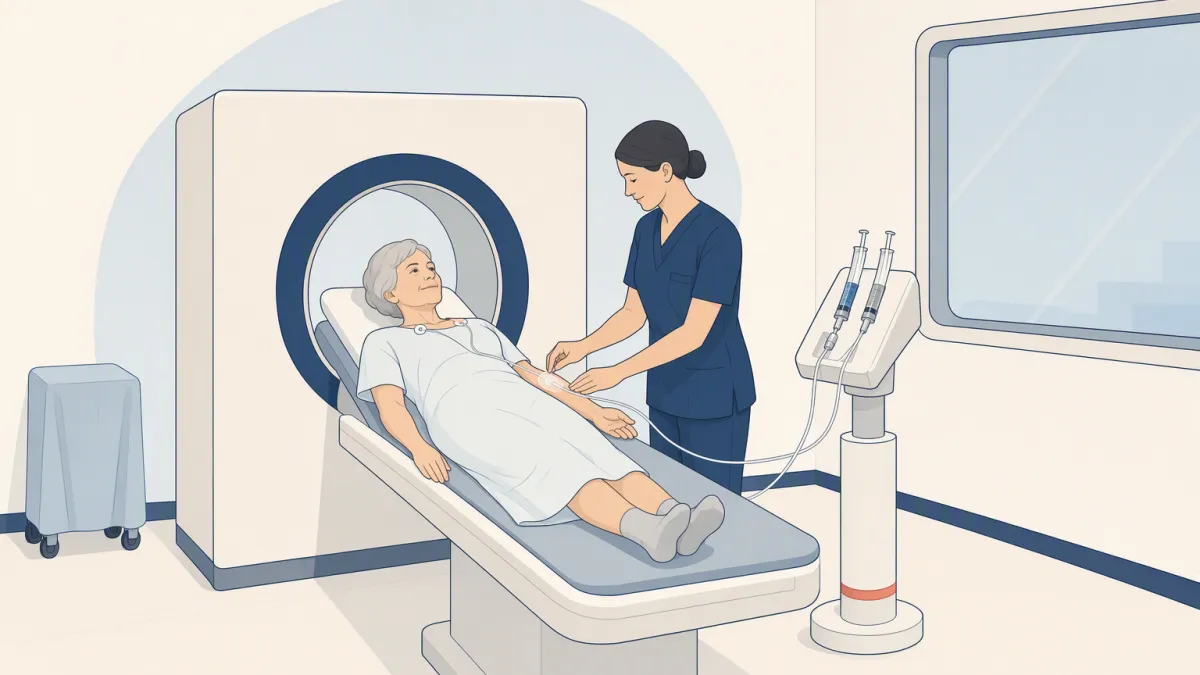
1Before you arriveTell the team about pregnancy, kidney disease, contrast reactions, metformin and any erectile-dysfunction medicine. Many centers ask you to fast for a few hours and avoid caffeine — your coordinator confirms the rules when you book.
-
2Safety checksKidney function and allergy history are confirmed before the scan goes ahead.
-
3IV line in, electrodes onA nurse places a small IV in your arm and ECG pads on your chest. If your heart rate runs fast, a beta-blocker may be given and allowed time to work.
-
4A few breath-holdsNitroglycerin is often given under the tongue just before scanning. The contrast brings a brief warm flush. The scanner captures the arteries between heartbeats; your coordinator confirms the total time on the day.
-
5AfterwardsIf you had a beta-blocker or nitroglycerin, the team may watch you briefly before you leave. Follow their advice on fluids, especially if you have heart or kidney disease.
Cost and coverage
The live price further down this page is the booking price at New Dawn Health; anything billed separately — such as biopsy or pathology where it applies — is confirmed when you book. What happens after that depends on where your coverage comes from:
- In Taiwan, screening is paid for by the visitor. Short-term visitors are not covered by Taiwan's National Health Insurance, so screening is self-funded.
- Reimbursement at home is a question for your insurer. Whether a scan with or without symptoms is covered depends on the plan. Ask them before you book, and ask which documents they need.
- Availability depends on the package and clinic. Which packages include it, or offer it as an add-on, is listed below and confirmed when you book.
Results and follow-up
A radiologist describes each coronary artery: where plaque sits, whether it is soft or calcified, and how much it narrows the channel. Many reports summarize this with CAD-RADS, a 0–5 grading system from the cardiac imaging societies:
A ladder like this is the general pattern, not a rule your case must obey. Reporting conventions differ between hospitals, and two experienced clinicians can read the same finding and reasonably advise differently. Where your report or your doctor differs from this table, go with them — they are looking at your actual result.
- A severe narrowing is not automatically a stent. Management can be medication, further tests of blood flow, or a procedure, depending on symptoms and findings.
- Report language and turnaround are confirmed when you book.
- Take the report to your own doctor. The images and report are yours to keep for comparison later.