What is an H. pylori test?
Helicobacter pylori, or H. pylori, is a bacterium that lives in the mucus lining the stomach. The infection usually causes no illness by itself. Over years, the inflammation it causes can lead to ulcers and, in some people, stomach cancer.
An H. pylori test answers one question: is the bacterium in your stomach now? Four kinds of test are in use, and they do not answer that question equally well:
| Test | What you do | Finds a current infection? | Can confirm a cure? |
|---|---|---|---|
| Urea breath test | Breathe into a container, swallow a dose of urea, then give a second breath sample | Yes | Yes, at least four weeks after treatment |
| Stool antigen test | Collect a small stool sample in a clean container | Yes | Yes, at least four weeks after treatment |
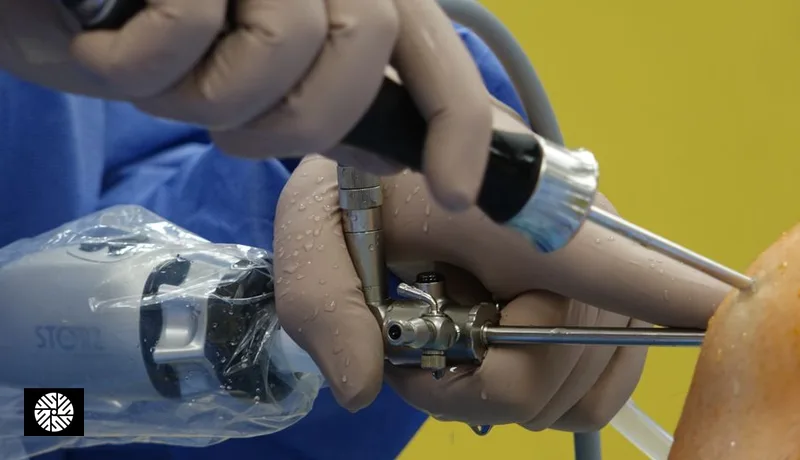
| Biopsy during a gastroscopy (rapid urease test or histology) | Small tissue samples are taken during an upper endoscopy, a camera exam of the stomach | Yes, and the pathologist also sees the lining | Yes, when a gastroscopy is needed for another reason |
| Blood antibody test (serology) | One blood draw | No: it cannot tell a past infection from a current one | No: antibodies can stay positive for decades after a cure |
The 2018 Houston Consensus, a US expert panel, recommends that serology "not be utilized for detection of active H pylori infection". For a biopsy, it asks for two samples each from two parts of the stomach, because the bacteria are not spread evenly.
What it can find, and what it cannot
A breath or stool test finds the bacterium. It does not look at the stomach, so it cannot tell you what the infection has already done.
- A current infection, by breath test, stool antigen test or biopsy
- Whether treatment worked, with the same tests, at least four weeks after the last dose
- Inflammation in the lining, when the test is a biopsy read by a pathologist
- Ulcers or stomach cancer: a breath or stool test cannot see them. A gastroscopy looks at the lining directly.
- Precancerous change, such as atrophy or intestinal metaplasia: only a gastroscopy with biopsies shows it.
- Cancer by blood test: no tumor marker replaces a gastroscopy. The tumor markers page explains why.
- Hidden blood from the bowel: the H. pylori stool test is not the colorectal stool test (FIT). Both are on the urine and stool tests page.
Who should be tested, and who should not
The American College of Gastroenterology (ACG, US) lists who to test in its 2024 guideline. The 2018 Houston Consensus adds when testing stops helping:
| Your situation | What the guidance says |
|---|---|
| A current or past peptic ulcer (stomach or duodenal ulcer) | Test (ACG) |
| Indigestion (dyspepsia) under 60, with no alarm features | Test (ACG). Alarm features are bleeding, vomiting, unexplained weight loss and iron deficiency. |
| Indigestion with alarm features | Endoscopy with biopsies (ACG). See a doctor rather than booking a breath test. |
| Long-term NSAID painkillers, or starting daily aspirin | Test (ACG) |
| A family history of stomach cancer | Test (ACG) |
| An adult in your household has H. pylori | Test (ACG) |
| Iron deficiency anemia with no clear cause, found on a blood count | Test (ACG) |
| Born in a region where stomach cancer is common | Listed by the ACG among high-risk groups |
| Treated, and a proper test has confirmed the cure | No further testing (Houston: "we recommend against further H pylori testing") |
| You want to check a cure with a blood antibody test | Not useful. Only breath, stool or biopsy tests confirm a cure. |
Medicines that can cause a false negative
Some medicines lower the number of bacteria in the stomach without clearing them. A test taken then can read negative while the infection is still there. The two US sources give different hold times for acid reducers:
| Medicine | ACG 2024 (before a test of cure) | Houston Consensus 2018 |
|---|---|---|
| Proton pump inhibitors (PPIs), acid reducers such as omeprazole | Hold 2 weeks | Discontinued at least 4 weeks before a breath or stool test |
| Antibiotics and bismuth | Hold 4 weeks | Stopped at least 4 weeks before testing |
| H2 blockers and antacids | Not addressed in the highlights | May be used without affecting breath or stool test accuracy |
H. pylori testing in Taiwan
Taiwan's Health Promotion Administration (HPA) offers a one-time H. pylori stool antigen test at ages 45–74, nationwide from 2026-01-01. Taiwan has no population gastroscopy program. Finding and treating the infection is its stomach-cancer strategy instead. Researchers at National Taiwan University Hospital put the infection rate at about 22% in that age group.
New Dawn Health books an H. pylori test in the ways below. Live prices are further down this page:
- A urea breath test on its own. The H Pylori Breath Test is offered at iHope Clinic in Taipei.
- A biopsy during a gastroscopy. The H. pylori Biopsy is an add-on to the Digestive: Upper Endoscopy & Colonoscopy package only. Its listing names a rapid urease test, histology or culture as the lab method.
- A stool antigen test. Whether a partner clinic offers one is something your coordinator confirms.
What happens on the day?
MedlinePlus, the US National Library of Medicine's health site, describes the breath test in these steps:
-
1Before you bookList every acid reducer, antibiotic and bismuth product from the last month. Ask the doctor who prescribed it whether to pause it before the test.
-
2Before the testWhether you need to fast, and for how long, is confirmed by your coordinator when you book.
-
3First breath sampleYou breathe into a container. This sample is the baseline.
-
4Swallow the ureaYou swallow urea that contains a marked form of carbon. H. pylori breaks urea down and releases that carbon as carbon dioxide.
-
5Second breath sampleA few minutes later you breathe into a second container. More marked carbon than at baseline suggests an infection.
A biopsy is taken during the gastroscopy itself, usually under sedation. Preparation, fasting and sedation are on the gastroscopy and colonoscopy page; your coordinator confirms them for your clinic.
What are the risks?
MedlinePlus lists no known risks for the breath or stool test. The risks of the other routes, and of the result itself:
- Biopsy during a gastroscopy. Throat discomfort, a small chance of bleeding at the biopsy site that usually stops on its own, and a very small chance of a tear.
- Sedation for the gastroscopy. You need someone to take you home. The gastroscopy page covers it.
- A false negative. Recent acid reducers, antibiotics or bismuth can hide an infection.
- A misleading blood test. A positive antibody result can reflect an infection that is long gone.
Results & follow-up after you fly home
When the report arrives, and in which language, is confirmed when you book. What follows depends on the result:
-
1If the result is negativeYou probably do not have the infection. If you were taking a PPI before the test, ask a doctor whether to repeat it later.
-
2If the result is positiveTake the report to a doctor, in Taiwan or at home. Treatment is a course of antibiotics with an acid reducer, prescribed by that doctor.
-
3Finish the full courseThe ACG 2024 guideline prefers a 14-day regimen when it is unknown which antibiotics the bacteria resist.
-
4Test again to confirm the cureThe ACG advises a breath, stool or biopsy test at least four weeks after treatment. Houston notes current treatments fail in at least 20% of cases.
-
5Stop once the cure is confirmedHouston recommends against further testing after that. Adults in your household may be tested too.
-
6Act on symptoms, whatever the resultBlack stools or vomiting blood still means an emergency call. In Taiwan call 119 (the local equivalent of 911).
Cost and coverage
The live prices further down this page are New Dawn Health's booking prices. What each one covers differs:
- The breath test is booked on its own. Whether a doctor's consultation is included is confirmed when you book.
- The biopsy add-on needs the endoscopy package. The endoscopy package's listing says biopsies the doctor decides to take during the scan are billed separately at the clinic.
- Treatment is separate from the test. Whether medicines can be prescribed at your visit is confirmed when you book.
- Short-term visitors are not covered by Taiwan's National Health Insurance, so screening is self-funded.
- Reimbursement at home is a question for your insurer. Ask before you book whether your plan pays for a test done abroad.