What is an echocardiogram?
An echocardiogram, or echo, is an ultrasound scan of the heart. A probe on your chest sends sound waves toward the heart. A computer turns the returning echoes into moving pictures of the heart as it beats.
The standard kind is a transthoracic echo, meaning "through the chest wall". It is the type this page covers. Doppler mode adds color to show which way blood moves through the heart and how fast. There is no radiation and nothing is injected for a routine scan.
| Measurement | What it tells you |
|---|---|
| Ejection fraction (EF) | The share of blood the main pumping chamber pushes out with each beat; a measure of pumping strength |
| Valves | Whether each of the four valves opens fully and closes without leaking |
| Chamber size and wall thickness | Whether the heart is enlarged, or its muscle is thicker than expected |
| Wall motion | Whether every part of the heart muscle squeezes normally; a weak patch can mean past damage |
| Pericardium | Whether fluid has collected in the sac around the heart |
What it can find, and what it cannot
An echo shows the heart's structure and how well it pumps. It does not show the inside of the coronary arteries, the small vessels on the heart's surface where heart attacks start.
- Weak pumping, measured as a low ejection fraction
- Valve problems: a leaking valve (regurgitation) or a narrowed one (stenosis)
- An enlarged or thickened heart, including cardiomyopathy, a disease of the heart muscle
- Damage from a past heart attack, seen as a patch of muscle that moves poorly
- Fluid around the heart and signs of raised pressure in the lung arteries
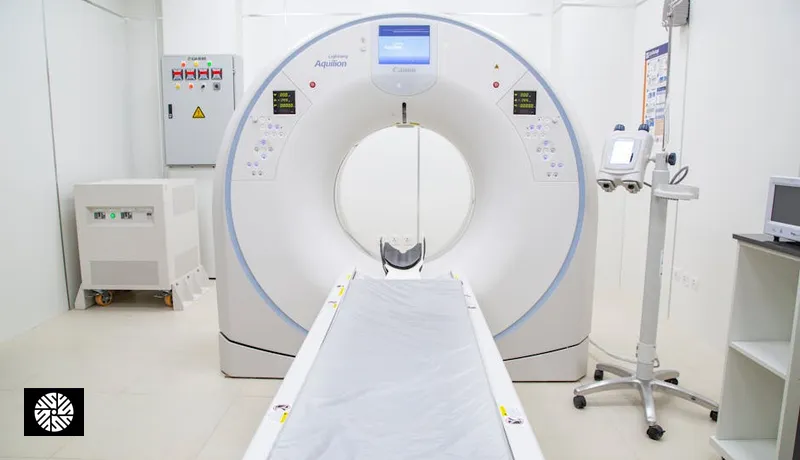
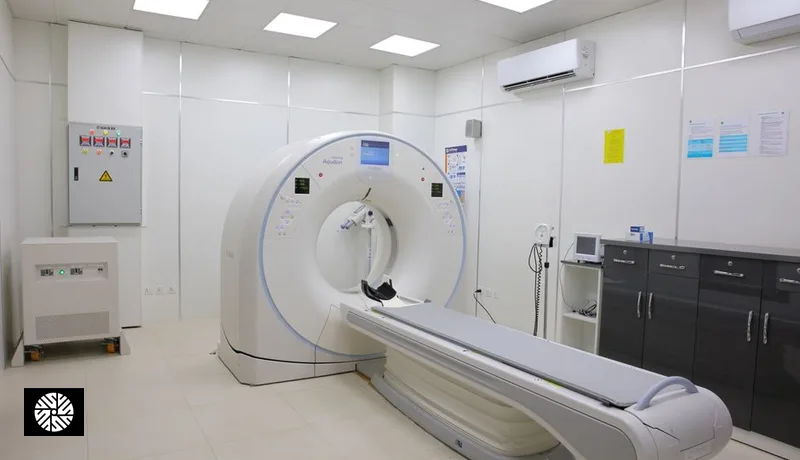
- Narrowed coronary arteries: a coronary CT angiogram looks at blood flow through them
- Calcified plaque: a heart calcium score measures calcium in the artery walls
- How the heart copes with exertion: a stress test, such as a treadmill test or a stress echo, checks the heart while it works hard
- Your heart rhythm: an ECG records the heart's electrical activity
- Unclear views: a transesophageal echo, with a probe passed down the throat, or a cardiac MRI can show more
Who should have one, and who should skip it
US cardiology societies have rated when an echo is worth doing. The panels included the American College of Cardiology (ACC), the American Heart Association (AHA) and the American Society of Echocardiography (ASE). Their ratings follow your symptoms and history:
| Your situation | Rating |
|---|---|
| Symptoms or signs that suggest heart disease, such as breathlessness or palpitations | Appropriate (2019). See a doctor first; sudden chest pain means an emergency call. In Taiwan call 119 (the local equivalent of 911). |
| A heart murmur that makes a doctor reasonably suspect a valve or structural problem | Appropriate (2011) |
| Fainting, with no other symptoms or signs of heart disease | Appropriate (2019) |
| High blood pressure, and a doctor suspects it has affected the heart (hypertensive heart disease) | Appropriate (2019) |
| High blood pressure, with no symptoms or signs of heart involvement | May be appropriate (2019) |
| A parent, child or sibling has an inherited cardiomyopathy | Appropriate (2019) |
| Before cancer medicines or radiation that could harm the heart | Appropriate (2019) |
| An athlete with an abnormal exam, an abnormal ECG or a family history of inheritable heart disease | Appropriate (2019) |
| An athlete with no symptoms, a normal exam and no such family history | Rarely appropriate (2019) |
| No symptoms or signs of heart disease; you want your heart function checked | Inappropriate (2011) |
The 2011 criteria weigh the harms of testing too. A false-positive can lead to an inappropriate diagnosis, and a false-negative can delay the right one. A murmur with no other symptoms or signs of valve or structural disease was rated inappropriate in 2011.
Getting an echo in Taiwan
Taiwan has no national echo screening program. The government-funded adult check-up covers a physical exam, blood and urine tests and health counseling. It does not include a heart ultrasound.
New Dawn Health books an echo in three ways. Live prices further down this page cover the routes the catalog can match; Package C and the Holistic Exam are priced on their own package pages:
- Inside a check-up package. At Central Clinic & Hospital Healthcare Center - Health Screening Center, Vital, Convenient Pro and Convenient Pro - Package C list an echocardiogram. In the Convenient Pro - Holistic Exam, it is one of the ultrasounds you can choose.
- With a cardiologist. The Taiwan Adventist Hospital cardiologist appointment states that it includes a heart ultrasound.
- As an add-on. A Heart Ultrasound can be added to some packages, depending on the package and partner clinic.
The add-on's listing says what the scan covers:
- Structures: the aortic root, the four chambers, the wall between the ventricles and the back wall of the left ventricle
- Valves: how the aortic, pulmonary, mitral and tricuspid valves look and work
- Output: how much blood the heart pumps
What happens on the day?
-
1Before you goMost echoes need no preparation. If your package also includes bloodwork or an abdominal ultrasound, it may require fasting. Your coordinator confirms the instructions when you book.
-
2Getting readyYou undress from the waist up and lie on your back or left side. Small sticky electrodes may be placed on your chest to track your heartbeat.
-
3The scanGel goes on your chest and the probe presses lightly in several places. You may be asked to breathe a certain way or hold still.
-
4Doppler soundsYou may hear a whooshing sound. That is the machine measuring blood flow.
-
5AfterwardsYou wipe off the gel and carry on with your day. An echo usually takes less than an hour; your coordinator confirms the visit time.
Reading your report
The ejection fraction is the number most people look for. The bands below come from the 2015 chamber guideline of the ASE and the European Association of Cardiovascular Imaging (EACVI). The normal range differs slightly for men and women:
A ladder like this is the general pattern, not a rule your case must obey. Reporting conventions differ between hospitals, and two experienced clinicians can read the same finding and reasonably advise differently. Where your report or your doctor differs from this table, go with them — they are looking at your actual result.
A number below the normal range is a finding for a cardiologist to interpret. They read it with your symptoms, blood pressure and the rest of the report.
What are the risks?
A standard echo has no known risks, according to MedlinePlus, and it does not expose you to radiation. You feel only slight pressure from the probe. The real risks come from the result:
- False alarms. The US criteria warn that a false-positive can lead to an inappropriate diagnosis and more testing.
- False reassurance. A normal echo says nothing about narrowing inside the coronary arteries.
- Extra scans for minor findings. A trace valve leak does not need routine re-checking; the 2011 criteria rate that inappropriate.
- An injection, sometimes. Some echoes use saline or a dye to sharpen the picture. If yours does, the team explains it first.
Results & follow-up after you fly home
When the report arrives, in which language, and who reads the images are confirmed when you book. What follows depends on what the report says:
-
1Keep the written reportIt lists the ejection fraction, chamber sizes and the state of each valve. Your doctor at home needs those numbers.
-
2Ask for the imagesAsk whether the clinic can release the scan images in DICOM, the standard format for medical images. A future echo is more useful when compared with this one.
-
3Book a doctor if anything is flaggedA reduced ejection fraction, a moderate or severe valve problem, or thickened walls is a reason to see a cardiologist. Take the report and images with you.
-
4Let a cardiologist set any repeat scanThe 2011 criteria rate a routine re-check of mild regurgitation within three years, with no change in symptoms or exam, as inappropriate.
-
5Act on new symptoms, whatever the report saidA normal echo does not protect you from a heart attack. Chest pain or sudden breathlessness still means an emergency call. In Taiwan call 119 (the local equivalent of 911).
Cost and coverage
The live prices further down this page are New Dawn Health's booking prices for the routes above. What each one covers differs:
- Packages include an echo among many tests. Each package card lists what it covers.
- The cardiologist appointment adds a doctor's visit. Your coordinator confirms what the visit includes when you book.
- Short-term visitors are not covered by Taiwan's National Health Insurance, so screening is self-funded.
- Reimbursement at home is a question for your insurer. Ask before you book whether your plan pays for an echo done abroad.